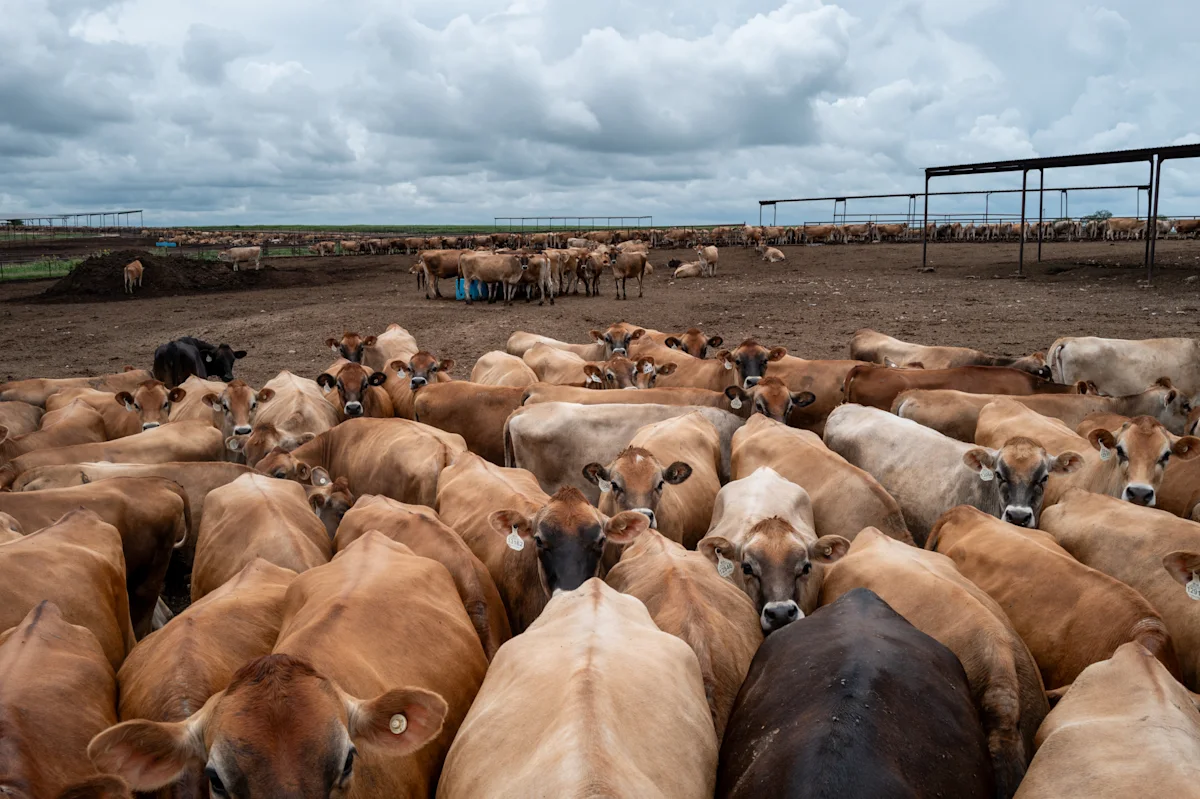
A cattle shortage in the US could get some relief with the reopening of the Mexican border, but Tyson Foods CEO Donnie King said it won’t make up the losses entirely this year, as a long list of factors weighs on beef supply.
Beginning Aug. 24, the US Department of Agriculture (USDA) will reopen the Douglas, Ariz., port of entry for cattle trade before opening two other ports in New Mexico, which together account for more than half of imports.
The USDA suspended cattle imports through the southern border, which historically sent roughly 1.2 million cattle into the US per year, in November 2024 and again in mid-2025 due to concerns about the spread of the New World screwworm.

“Every animal entering the United States through these ports will undergo a full USDA inspection to ensure it is free of any signs of New World screwworm,” the USDA said, addressing ranchers’ concerns about the parasite.
The US cattle herd is at its lowest level in 75 years, according to the USDA, driving consumer beef prices to record highs. In Tyson Foods’ fiscal third quarter, beef volume dropped 15.9% while prices rose 12.1%.
“To be clear, the reopening of the Mexican border will not solve the entire gap of beef losses we are currently seeing,” King, who is expected to retire in October, told investors on Tyson’s earnings call on Monday.
“We are not waiting passively for the cattle cycle to turn, and we continue to focus on improving the variables within our control,” King added.
Tyson COO Wes Morris said it could take up to a year for the industry to see a positive impact from the reopening of the border. First, younger cattle will need to go to grass and then to feed yards.
Due to timing, the border reopening won’t have a material impact on the remainder of this fiscal year, which ends in September, though it could provide the potential for improvement in 2027 and after.
The company lowered its outlook for 2026 adjusted operating income due to challenges around beef. It now expects its annual operating profit range to be between $2.1 billion and $2.3 billion, down from the previous range of $2.2 billion to $2.4 billion. For the beef segment, Tyson expects an operating income loss of $500 million to $650 million.
It’s not just Tyson Foods feeling the pinch of a tighter cattle supply — many restaurant chains are feeling it too.
In a note to clients, TD Cowen analyst Andrew Charles said Texas Roadhouse (TXRH) is the biggest beneficiary of the border reopening, due to beef representing 50% of its cost of goods, followed by Chipotle (CMG), LongHorn Steakhouse owner Darden Restaurants (DRI), Chili’s parent Brinker International (EAT), and Shake Shack.