India has supplied the West with lush textiles and embroideries since the dawn of the Silk Road, but only now that it’s emerged as a fast-growing luxury market have Indian designers started to break through in a meaningful way.
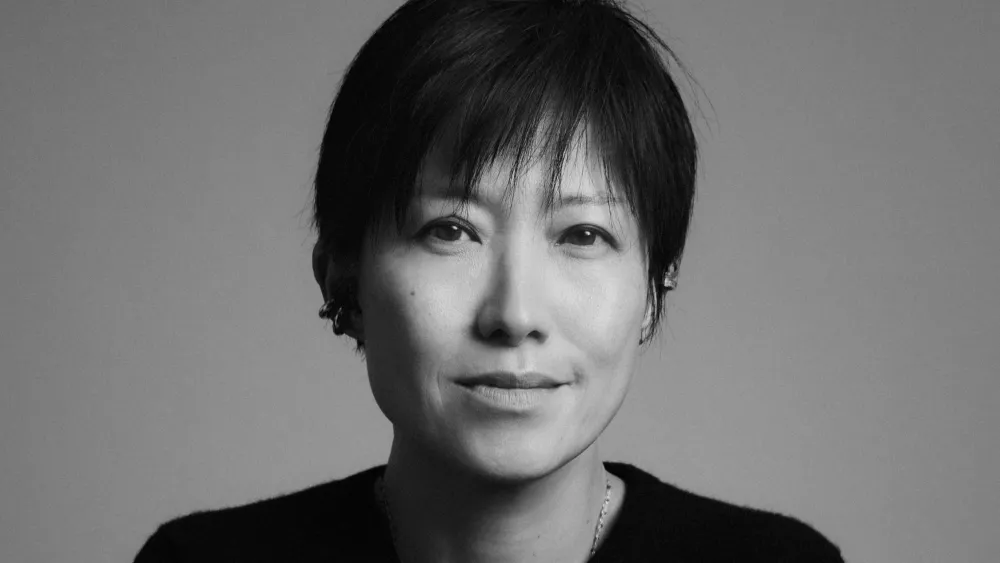
Pooja Barbhaiya is hoping to do just that, founding her womenswear label Nanda on the dialogue between East and West that’s shaped her personal history. “I grew up in upstate New York, and a little bit in New Jersey, but my family moved here from India in the ‘70s, so a lot of what I’m doing is informed by having cultural roots in these different places,” she said during an exclusive, albeit informal, preview of her spring collection at Sophie Elgort’s photo studio in SoHo.

Pooja Barbhaiya
Courtesy of Sophie Elgort
Barbhaiya had just finished having her portrait taken, one of the last items on her to-do list before she officially launches Nanda during New York Fashion Week by appointment to press and buyers. But the road to the front of Elgort’s lens was long and winding.
While she previously studied painting, Barbhaiya always knew fashion was where she’d end up. “At 16, I was like, ‘I’m gonna have my own company,’ thinking I would do it when I was like 24, but it took a little bit longer,” the 44-year-old joked. “But you know what? In a way, I’m so happy that I didn’t do it then because having the wisdom that I have now, I think it informs so much — it’s not just about creativity; it’s about building a business and understanding how that business functions.”
Barbhaiya took a detour to hone her business savvy at Kate Spade, where she worked for more than a decade, rising to senior accessories director. Feeling unsatisfied by the company’s corporate needs, she left a year and a half ago with the intention of building Nanda as a celebration of her cross-cultural upbringing.

Pooja Barbhaiya (center) with her great-grandfather Gulzarilal Nanda (right).
Growing up, Barbhaiya spent summers with her grandparents in Ahmedabad, known as the Manchester of India for its booming cotton industry. She visited with the local suppliers, tailors and various other specialty makers, “so it’s in my blood,” she said, “to be surrounded by beautiful fabrics and intricate embellishments, and what I really wanted to do was take those roots, but also my life here in New York, and create a culmination of the two.”
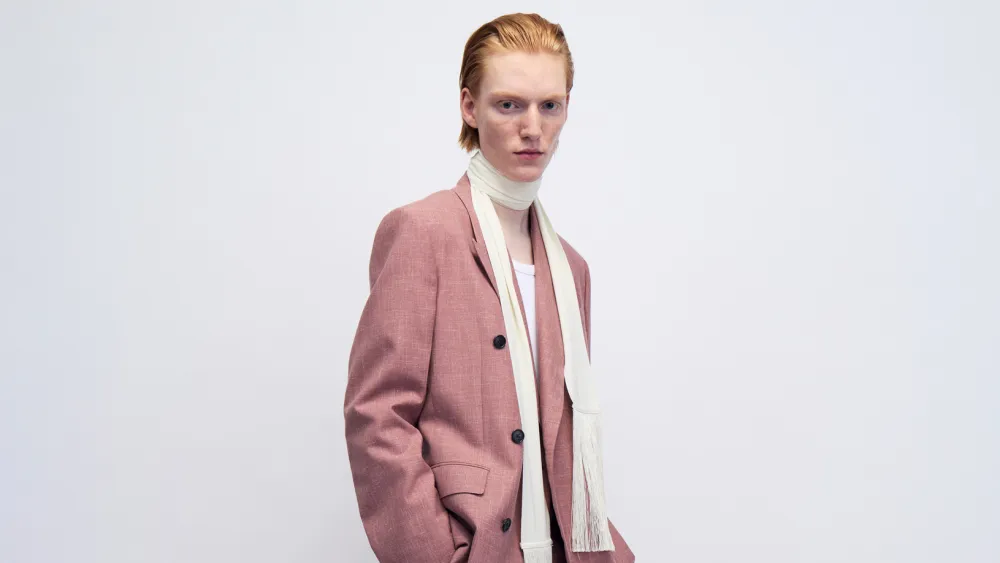
Her great-grandfather’s surname, Nanda combines the two both literally (manufacturing is split between the Garment District and Mumbai) and aesthetically, using American sportswear as a vessel to explore traditional Indian craftsmanship and construction.

Nanda, spring 2027 ready-to-wear
Courtesy of Nanda
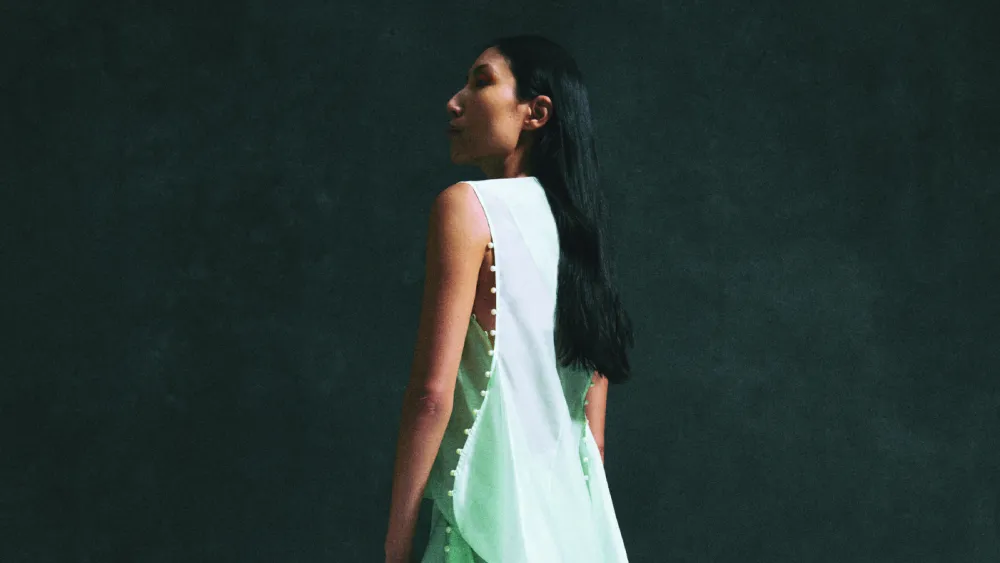
Highlighting the Shisha mirror details on a wrap skirt in lace-like Chanderi jacquard overlaid with organza, Barbhaiya said, “There’s such a wealth of technique in India, you could be designing for years and not repeat the same thing. There’s so much opportunity to really showcase the talents of what’s happening in that part of the world.”
Aside from the materials, what makes that skirt a standout is its exposed button-fastening system, which Barbhaiya engineered to mimic the fit and styling adaptability of saris. “Whether you lose a little weight, gain a little weight, get pregnant, it’s incredibly flattering.” And as a bonus, her one-size-fits-most approach lowers production costs while also simplifying inventory management.

Nanda, spring 2027 ready-to-wear
Courtesy of Nanda
Elsewhere, it’s used in a fluttering asymmetric gown in electric orange with pressed silk flowers inspired by the natural ones Barbhaiya’s grandmother taught her how to make. Other bits of clever engineering include tube-like seams stuffed with horsehair that run along sleeves stiffening them into a wave shape and drawstrings on woven khadi pants that pull in discreetly from the sides like a handbag. “I think this is where my accessories background comes in because I’m really thinking about how the garments function,” Barbhaiya said.
Her artist training also comes into play in the collection’s rich surface treatments. Glass and resin-beaded necklines, for example, reference the bulbous forms and colorblocking of Barbhaiya’s two favorite Abstract Expressionists, Ruth Asawa and Helen Frankenthaler, respectively.

Nanda, spring 2027 ready-to-wear
Courtesy of Nanda
As for retail, Barbhaiya said a web store is slated for November, initially offering pieces from Nanda’s proof-of-concept, which range between $750 and $3,950. “I think this brand needs to stay very close to the customer,” she explained, adding that her primary goal for NYFW is to court high-touch specialty retailers.
Aside from being a family name, coincidentally Nanda translates to “joy” in Sanskrit, jiving well with Barbhaiya’s overall mission: “The world doesn’t need another brand. For me, it’s about creating something really beautiful and being part of these really joyful moments in people’s lives.”

Nanda, spring 2027 ready-to-wear
Courtesy of Nanda