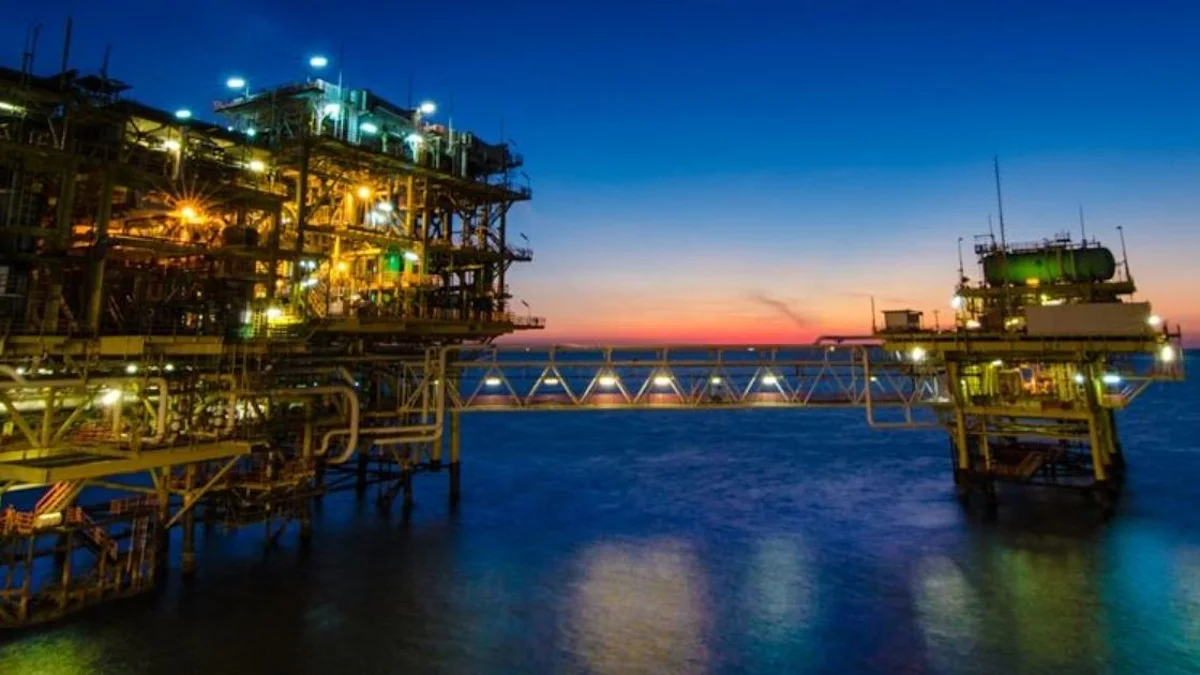
Some of the world’s largest oil and gas companies have adopted a new modus operandi ever since the historic oil price crash of 2020 devastated energy companies, prioritizing returning more cash to shareholders while expansion plans have been put on the back burner. Indeed, over the past five years, Exxon Mobil (NYSE:XOM), Chevron (NYSE:CVX), British Petroleum (NYSE:BP), Shell (NYSE:SHEL) and TotalEnergies (NYSE:TTE) have collectively spent more than $100 billion annually in dividends and buybacks, good for nearly 80% of their earnings.
Hardly surprisingly, these companies have little left over to spend, President Trump’s “Drill, baby, drill” rallying cry notwithstanding: EY has reported that capital expenditure (capex) by the United States’ 30 largest publicly traded exploration and production (E&P) companies fell 49% Y/Y in 2025, with exploration spending falling 11% to $4.8 billion, good for a mere 3% of total capital expenditures across the group. The 30 companies represent ~ 43% of total U.S. oil and gas production.
Meanwhile, money spent on acquisitions fell 70% as the previous consolidation wave lost steam. But here’s the kicker: oil production by the group hit an all-time high in 2025 while revenue increased 7%, implying that spending less on drilling has hardly hurt their bottomlines.
“One of the clearest signals in this year’s study is that oil production and reserve replacement are moving in different directions,” said EY’s Matt Melnar. “Reserve replacement metrics alone no longer tell the full story. Producers are engaged in a balancing act between production goals, shareholder returns, and long-term portfolio resilience as they make investment decisions.”
Related:
Big Oil companies have successfully increased production volumes despite falling capex thanks to a combination of drilling efficiency gains, technological advancements as well as a strategic shift toward shorter-cycle, high-return assets. Historically, higher production required a linear increase in spending to drill new wells. However, shale oil companies are drilling longer, horizontal wells that sometimes extend three miles or more, allowing a single surface rig to tap more oil-bearing rock. Completing multiple wells simultaneously slashes execution times and service contract costs.
Additionally, operators are increasingly deploying AI, machine learning and predictive analytics to maximize production efficiency, cut operating costs and extend the lifespan of oil and gas wells. Deep learning models process large 3D and 4D seismic datasets, combining them with historical drilling logs to map out high-permeability zones with higher precision. Predictive analytics evaluate past completion data to determine the volume of proppant required, fluid and pressure needed to fracture a specific sweet spot, ensuring maximum estimated ultimate recovery (EUR). Meanwhile, AI-driven geosteering systems analyze real-time rock properties at the drill bit, automatically adjusting the trajectory to maximize yields. When drilling for natural gas, AI systems are used to continuously adjust gas injection rates through surface and downhole valves thus ensuring the optimal liquid-to-gas ratio is achieved.
The U.S. shale boom broke the old model. For decades, oil production growth meant long, expensive offshore or mega field projects that took years to pay off. Shale flipped that: wells get drilled, fracked, and pumping oil within months. With demand set to plateau and geopolitics this unstable, a 10-year infrastructure bet is a much riskier bet than a short one; operators would rather earn their money back fast than risk getting stuck with assets nobody wants once demand or policy shifts under them.
However, Big Oil cannot continue cutting capex indefinitely. Some oil assets such as Exxon Mobil’s deepwater projects in Guyana require heavy upfront investments but significantly less additional capital to keep going. Others have been leaning heavily on their inventories of Drilled but Uncompleted (DUC) wells to keep production up without spending more on new wells. Back in May, the U.S. Energy Information Administration (EIA) revealed that the total U.S. DUC inventory dipped to approximately 4,972 wells, marking the lowest level since the agency began tracking the metric in 2013. This also marked 14 consecutive months of decline in the DUC count.
Faced with periods of weaker oil prices, producers chose to complete previously drilled wells rather than deploy new rigs, which makes economic sense since completing an existing DUC historically costs around $5 million to $6 million, compared to $8 million to $10 million required to drill and complete a new well from scratch.
However, this has come at a cost: EY reported that Big Oil’s oil reserve additions from discoveries and extensions declined 11% year over year, failing to fully replace production volumes for the first time in five years. This implies that U.S. shale producers have less flexibility to quickly ramp up output during sudden global supply crunches or oil price spikes.
Thankfully, American energy operators are still spending heavily on natural gas production: natural gas reserves increased by 14% Y/Y while discoveries increased by 21%, surpassing production’s 18% Y/Y growth clip with reserve revisions turning positive for the first time in five years.
“As energy security, industrial competitiveness and AI-related infrastructure investment continue to shape energy markets, US natural gas is increasingly positioned at the center of several of the industry’s most significant demand trends,” EY’s Patrick Jelinek said. “The strength we’re seeing in gas reserves, discoveries and revisions suggests producers are recognizing the opportunity and positioning for a future where natural gas plays an increasingly strategic role in the energy system.”
By Alex Kimani for Oilprice.com
More Top Reads From Oilprice.com
Oilprice Intelligence brings you the signals before they become front-page news. This is the same expert analysis read by veteran traders and political advisors. Get it free, twice a week, and you’ll always know why the market is moving before everyone else.
You get the geopolitical intelligence, the hidden inventory data, and the market whispers that move billions – and we’ll send you $389 in premium energy intelligence, on us, just for subscribing. Join 400,000+ readers today. Get access immediately by clicking here.