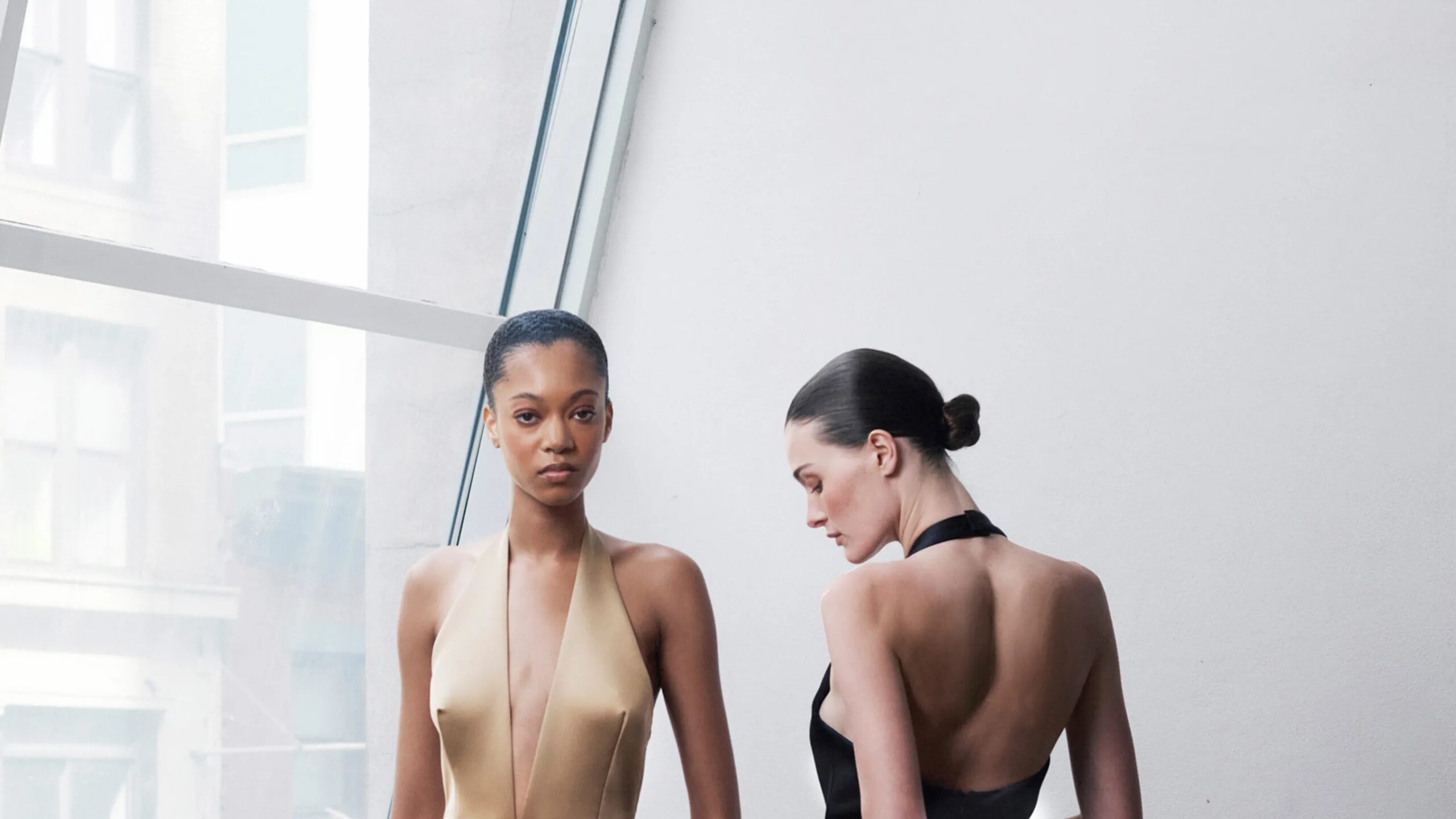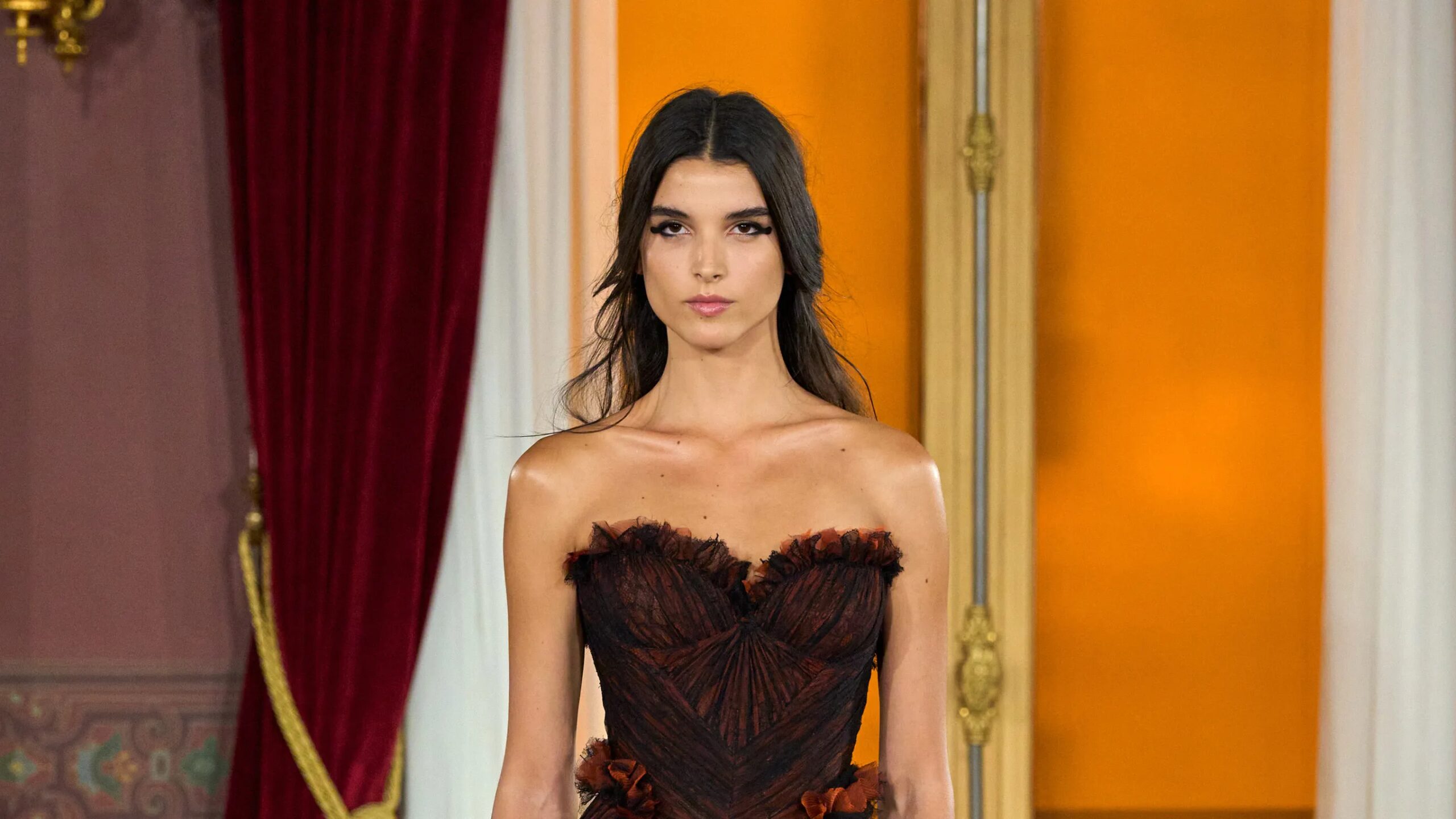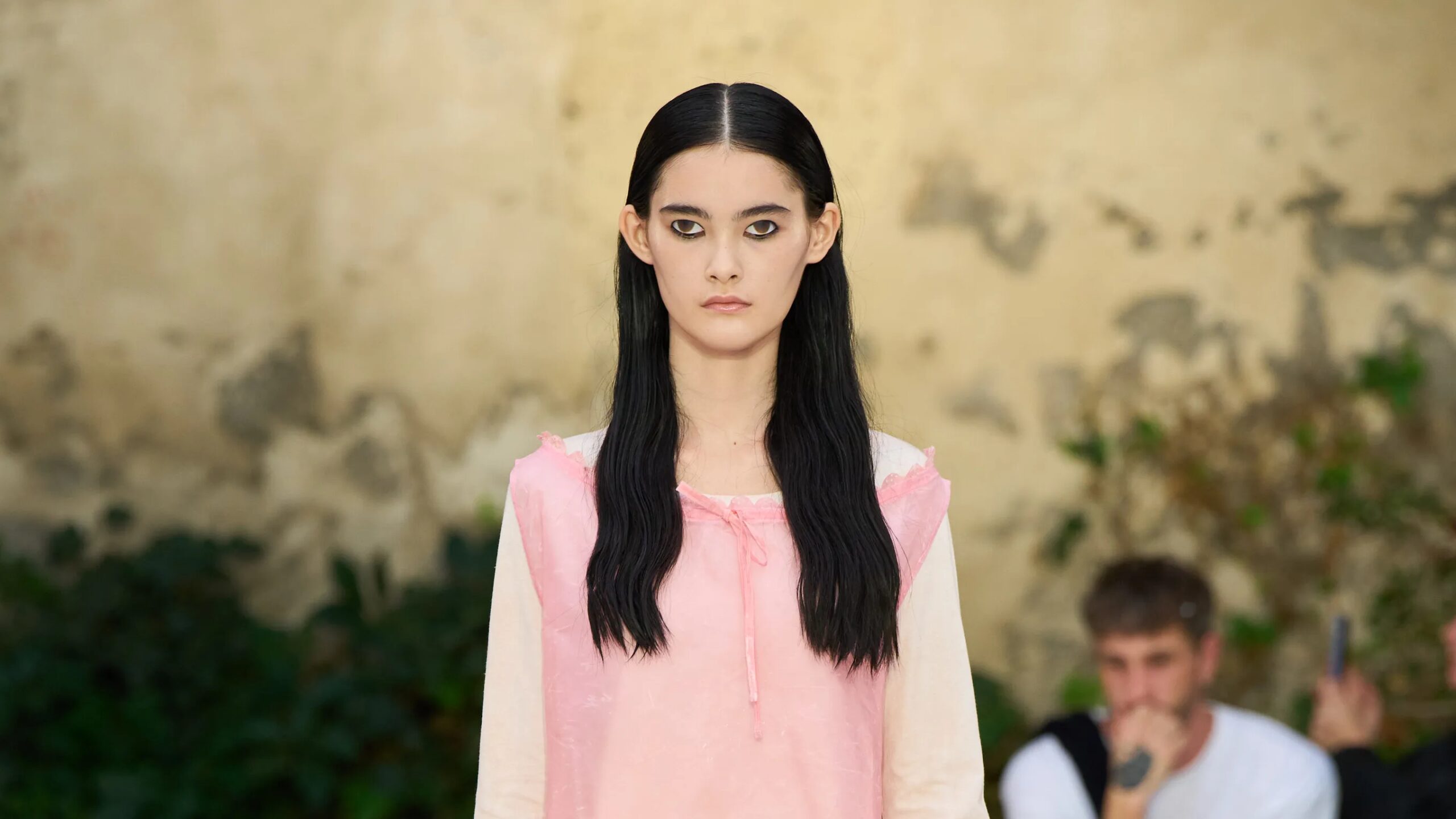
Who knew that Ellen Hodakova Larsson, a known “horse girl,” had the facility to move as easily in the surf as on turf? It turns out the designer grew up sailing. This summer, on the second day of two weeks at sea, her phone died. “I was in a very Zen moment with the ocean,” she said on a call. It was an experience that seems to have deepened Hodakova’s already close connection to nature. “I wanted to highlight the aquatic world because the oceans are essential for us to be able to live,” she said.
Material and moral awareness is what Hodakova’s brand is built on. As it happens, marine tackle is wonderfully varied and gave the designer plenty to work with in addition to recurring staples such as leather and bed linens. The theme extended beyond the clothes: models walked on a runway covered with sea salt; the soundtrack referenced Luc Besson’s 1988 film, Le Grand Bleu.
The opening looks, which taken together formed a wardrobe of archetypes from shift to trench, were made from a sturdy waxed cloth; its durability read as papery fragility. A suite of sailor-collared designs was followed by some of the deconstructed tailoring the brand is known for; note the dress and jacket made from trousers. From here the designer really started to get her feet wet, showing pieces made from sails. Hawser rope was worked into chunky (and potentially scratchy) knits. Its heft contrasted with the delicacy of fishing nets—both industrial and hand made—the designer made use of. The “hems” of the mesh on the dresses where it hung loose looked like they had lettuce (or in this case seaweed) edges.
Transparency is a (see) through line of the season and Hodakova achieved that by wetting some of the garments. Normally, you’d want to be clear of the water if there was a chance of encountering strong-jawed reptiles who swim, in contrast you’d want to get really close to the black coat (look 31) because Hodakova and her team painstakingly used leftover scraps of leather to mimic the texture and pattern of crocodile skin.
This was an accomplished collection defined by clarity, a sense of brittle delicacy (at the start), and a faint air of melancholy like the salty taste of dried tears. That wistful sadness has some of its roots in Hodakova’s sensitivity to the treatment of animals. The models caught in fishing nets can be read as a metaphor for how we treat other species. “They’re trapped into what we are pushing them into and they have no choice,” the designer said. Fashion, on the other hand, is almost entirely discretionary. Because of the mindful way that Hodakova has built her practice, customers have the option to engage with a brand that stands for something beyond profit.