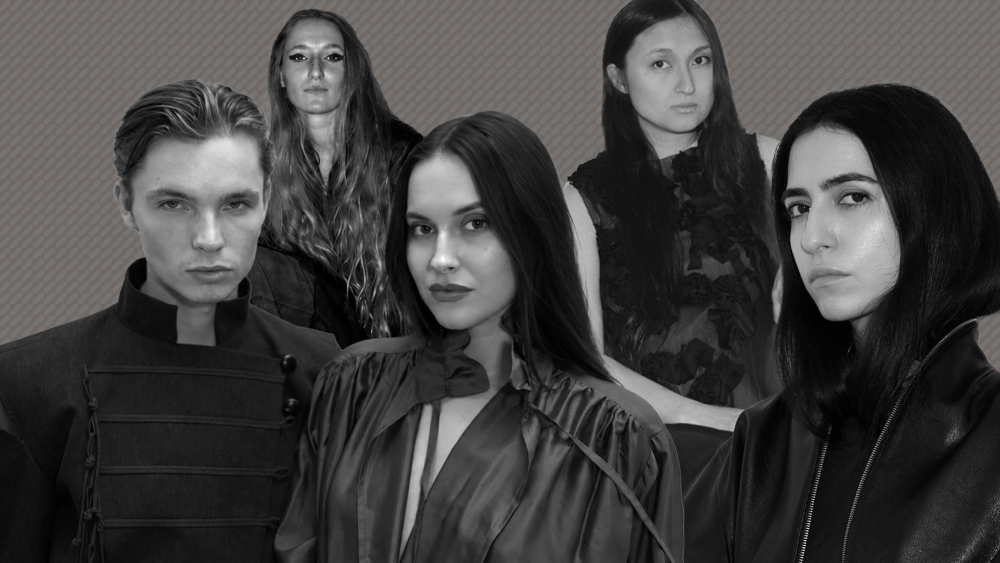
PARIS — What a thrill to get dressed in the morning in clothes that don’t just cover you, but plug you back into yourself. That’s the feeling four brands showing during Paris Fashion Week are chasing, whether by building cityscapes around the body or treating the everyday as an occasion. Meet some of the designers WWD is watching for spring 2027.
Fidan Novruzova
“I feel like a good amount of delusion was in me — and helped me get places,” Fidan Novruzova joked, recalling how she skipped high school classes in Moldova to build the portfolio that got her into Central Saint Martins.
That drive has carried the 2026 ANDAM Award finalist and 2024 LVMH Prize semifinalist from Chișinău to London and Paris, where she made her on-schedule presentation debut Monday. It also earned her industry attention and celebrity fans including Solange, Chloë Sevigny, Dua Lipa, Rosalía, Tessa Thompson and Irina Shayk.
Novruzova launched her namesake label in October 2020. Now working from a small Paris studio, she treats each collection as a reflection of the previous six months of her life, drawing on the image-driven internet culture of her youth.
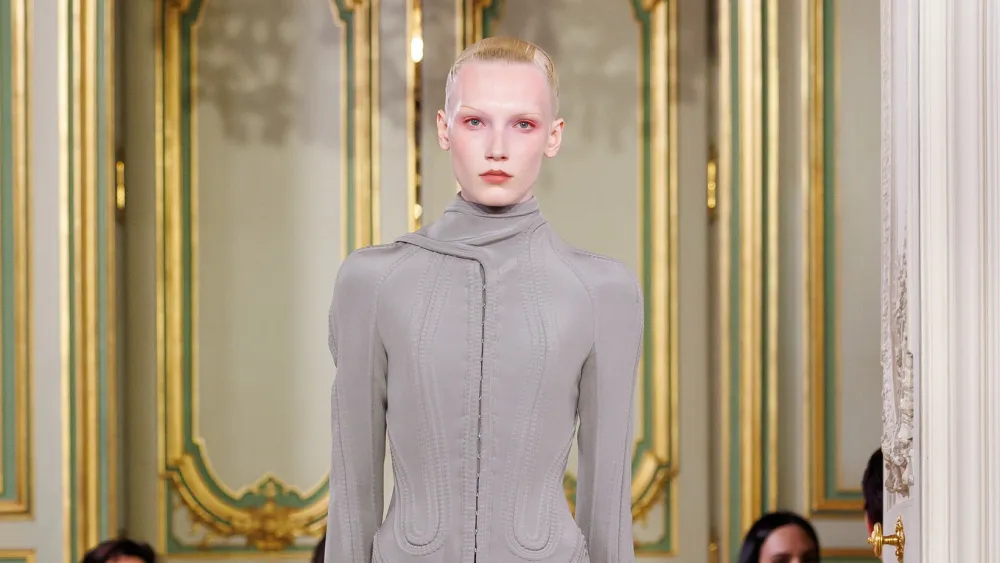
Her established codes include controlled deconstruction, cinched waists, bold fastenings and a mix of Neoprene, leather and occasion wear-inspired shapes designed to retain a sense of ease.
For spring 2027, artist Mara Goldberg informed a collection Novruzova calls “occasional everyday dressing”: pieces that make getting ready feel special, even for a coffee run, but are meant to be worn regularly.
The lineup includes knitwear with multiple folded panels or exaggerated collars; cropped lady-like jackets and shirts with asymmetrical deconstructed necklines that made them sculptural; revisits of her circular leather boleros with a zip that goes all the way around the edges; her first sandal style, and the Mira Vanity bag — named for her niece — with built-in mirrors.
An Adidas collaboration features triple shoelaces tied into a bow, recalling Novruzova’s earlier bootleg designs.
Prices start in the 200-euro range for jersey and top 2,000 euros for leather jackets. Over the past year, accessories accounted for 55 percent of sales and ready-to-wear 45 percent; direct-to-consumer made up 57 percent, wholesale 43 percent. Stockists include H.Lorenzo, Carmen in Amsterdam, Empty in Seoul, Le Salon in Macau and Fernweh in Tokyo.
Meruert Tolegen
For Meruert Tolegen, getting dressed means finding clothes that feel “moody, playful and arty” yet remain wearable — a balance she has honed across a six-year career that began with a childrenswear brand.
Born in Kazakhstan and raised in New York, the self-taught designer came to fashion through pre-med studies and hospital internships. In time, she found that the same hands that once stitched up fingers were better suited to drawing, painting and dissecting the archival dresses she’d quietly amassed from the Century 21 near her home, including finds by the late Alber Elbaz.
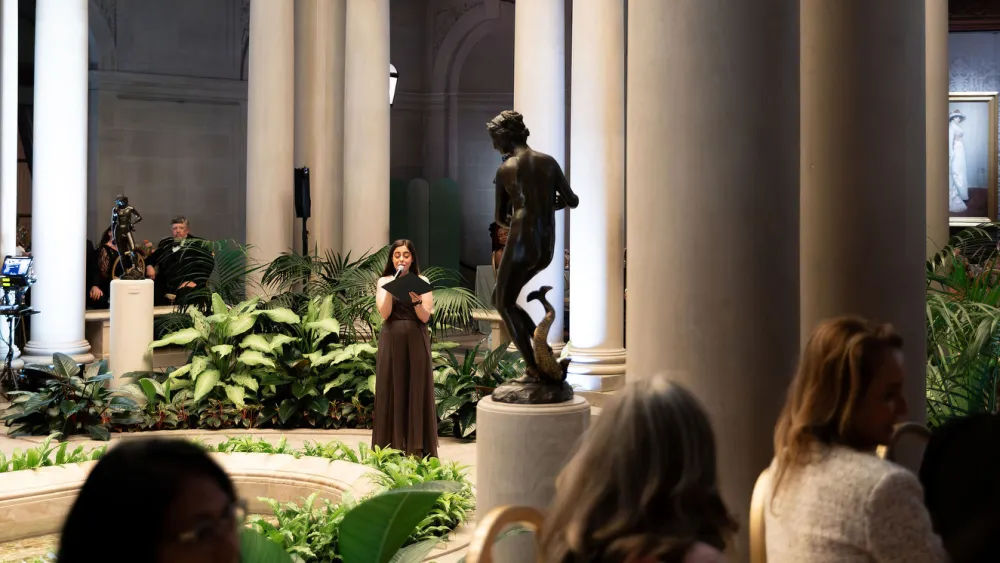
Tolegen began selling in Paris, but her handwork, lace and sculpted volumes found a strong U.S. audience, particularly after she opened a New York boutique. A 2025 LVMH Prize semifinalist, she is now giving Paris a fuller view of her world with a Tuesday presentation at the Palais de Tokyo as part of the Sphere showroom, in partnership with the Fédération de la Haute Couture et de la Mode.
For spring 2027, she began with dolls before turning to florals: polka dots meet cross-stitch-style embroidery and watercolor-like fields of color. The collection includes ruffled denim coats, sculpted skirts, pannier dresses, cocoon coats and corseted pieces, reworked for ease, color and different body types, including men’s.
Tops and blouses start at about $600; dresses range from $1,200 to $2,800; coats from $1,900 to $3,500, and custom or hand-worked pieces from $8,000. Her designs have been worn by Sarah Jessica Parker, Chloë Sevigny, Sarah Pidgeon and Laufey.
Lucie Neouze
Lucie Neouze thinks of getting dressed as building a city on the body, treating garments as architecture in motion.
Raised in Beijing in a family of architects whose projects include train stations and prominent art institutions, the Paris-based designer chose cloth over concrete. But she sees patternmaking as a form of three-dimensional planning — at a different scale.
Trained at the Institut Français de la Mode, where she showed concretions of fabric and wood, she was seasoned by a stint at Rick Owens, a dream position that came with a stay at Concordia but that she eventually put aside in favor of exploring her own vocabulary of stratified constructions and complex pattern work.
Her debut “Pulse” collection introduced the sculptural volumes that became her signature. Following an early preview in Tokyo, “Redpulse” for spring 2027 will be unveiled on the runway in Paris on Monday, in Brigitte Bardot’s former apartment on Boulevard Saint-Germain.
Neouze balances spiral dresses and intricately layered balloon-leg trousers with cleaner separates in jersey and organza. Her clamp trousers, known for their crenelated outlines, now come in shorts.
Jersey tops start at about 400 euros; dresses range from 650 to 1,000 euros; jackets from 1,200 to 1,400 euros, and the most elaborate dresses top 2,000 euros.
Production spans ateliers in Italy, Turkey and China. Neouze said she wants “to fight the European idea that made in China is really bad,” adding, “I feel it is wrong.”
She is also developing “Metropolis,” a fragrance with perfumer Cécile Maton inspired by Sichuan pepper, Chinese incense and the mineral mood of a megacity.
Adelina Bernard
For Adelina Bernard’s Alice Lindvall and Menno Idink, getting dressed is about “writing your own story on the body” with clothes that shift through ties, pulls and reversible layers.
The pair met at ESMOD in Paris and built a shared universe around storytelling and the “dark side” of emotions — passion, anger and temptation.
Lindvall gained experience with Ludovic de Saint Sernin and the Swedish Fashion Council; Idink worked with independent designer showrooms. Both came away with a close-up view of the challenges facing emerging labels.
They launched Adelina Bernard, named for their middle names, in November, shortly before graduating. “The Rotting Hour” drew on decaying fruit and the passage of time; “Pulling Strings” used puppetry, stringed constructions and reversible layers to explore authorship and control.
For spring 2027, “Hotel Arcidel” evokes a 1920s world, loosely nodding to Paris’ Hotel Claridge. The collection explores the disorienting pull of a space that makes its visitors lose their sense of self. Bellboy-inspired tailoring, silk eveningwear, kimono shapes and hand-beaded “wallpaper” surfaces are made from deadstock luxury fabrics and natural materials. Handmade jewelry echoes the embroidery.
The collection will be exhibited at Galerie Dohyang Lee on Oct. 6 and 7.
Prices range from about 240 euros for jersey basics to 450 to 850 euros for most ready-to-wear; leather and cashmere outerwear runs from 1,500 to 2,500 euros. The label sells through its website and a Paris showroom by appointment, with wholesale doors next in its sights.