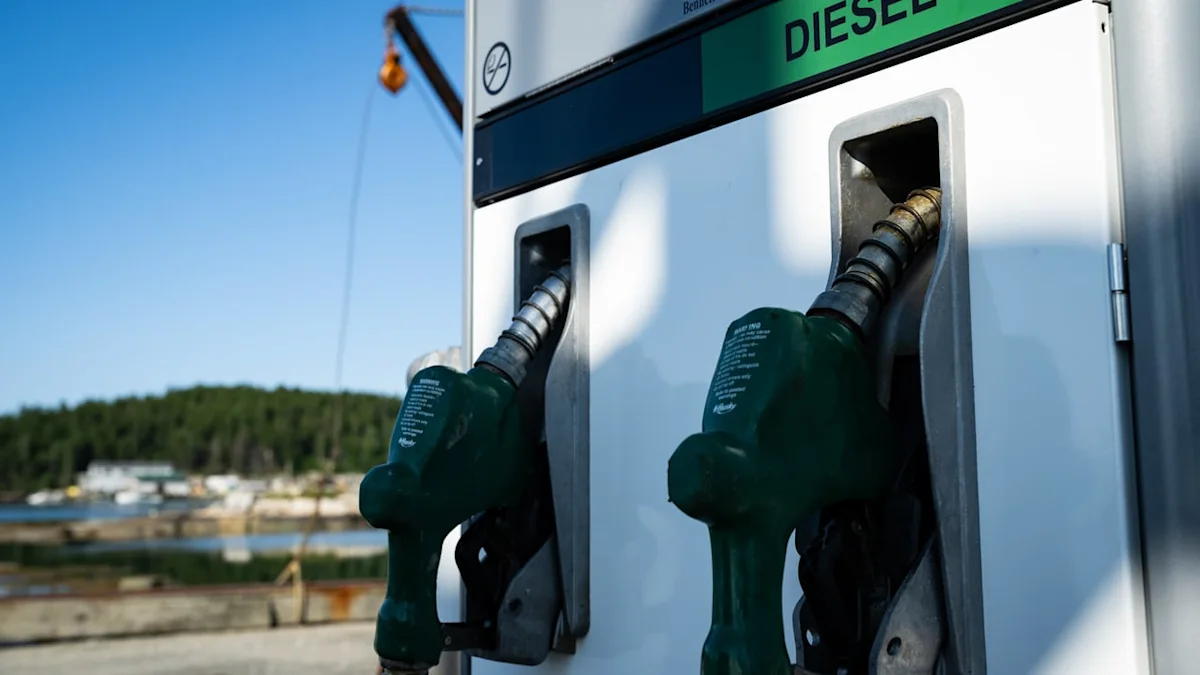
With U.S. retail diesel prices topping $6 a gallon this month for the first time, a worldwide shortage fueled by conflicts in Iran and Ukraine shows little sign of easing before next year, according to Reuters.
U.S. diesel stockpiles stood at 107.9 million barrels as of September 11 — a figure that, for that point in the calendar year, has not been matched since the EIA began keeping records in 1982. According to the EIA’s own public projections, distillate fuel oil stocks — a category that includes diesel — are set to drop under 100 million barrels in September and stay beneath the five-year low through all of 2026 and into most of 2027. The agency projects U.S. retail diesel prices will average $5.55 a gallon in the fourth quarter of 2026 and $4.40 a gallon in 2027.
Storage market data reinforces that outlook. October bookings for leasable diesel storage across North America and the Caribbean Islands reached 13 million barrels — a four-year peak — compared with just 11 million barrels available back in June, Steven Barsamian, chief operating officer of storage broker The Tank Tiger, told Reuters. Barsamian said that leases are going unsigned because there is little diesel available to store, adding that falling inventories alongside rising tank availability together suggest traders anticipate supplies will stay tight well into at least early next year.
The shortage stems from supply disruptions on two fronts. Conflict in the Middle East has restricted tanker traffic through the Strait of Hormuz, cutting crude flows and constraining refinery output, while Ukrainian strikes on Russian refining infrastructure have compounded those losses. The EIA said it estimates refinery outages in Russia will continue to affect the global distillate market through the first half of 2027.
European and Asian inventories are also strained. At the Amsterdam-Rotterdam-Antwerp hub, July inventory levels sat roughly 16% under the five-year average, Insights Global data showed, according to Reuters. Singapore’s distillate holdings have lately run around 8.2 million barrels on average, trailing the 9.6 million-barrel pace recorded through 2025.
As detailed in earlier coverage, the price surge is rippling through freight, agriculture, and home heating. Carmit Glik, CEO of Ship4wd, said diesel costs move through “freight rates, farm equipment, food delivery, and home heating — anything that touches a truck at some point in its journey,” according to Reuters. Mark Wolfe, executive director of the National Energy Assistance Directors Association, warned that households dependent on heating oil — concentrated in the Northeast — could face bills as much as 31% higher this winter if diesel prices hold at current levels.