When I tell filmmaker Shatara Michelle Ford that I don’t want to pin down Dreams in Nightmares, their elegiac sophomore feature, explicitly as a “road movie”—that it feels too slippery, too much its own thing, to sit neatly inside a genre built on decades of lone men and empty highways—they stop me, considerately.
“I appreciate you not wanting to put it in a genre bucket,” they say. “But the whole thing that I do is a revisionist exercise with all things. So this is a revisionist road movie. It’s definitely that.”
Ford goes on to call the road movie “one of the best genres since the Western to talk about the American imagination and westward expansion, Manifest Destiny, and the dynamic of discovering yourself that sits inside [this idea] of exploring one end of a place to another.” Dreams in Nightmares follows three queer, longtime friends in search of a fourth who has gone off the grid. It begins in Los Angeles, where Z (Denée Benton), a recently laid-off college professor, sets off for New York to pick up her friends Tasha (Sasha Compère), a laid-off business consultant, and Lauren (Dezi Bing), a not-so-employed poet. From there, the three friends stop in Pittsburgh, Iowa City, and Kansas City before eventually reaching Oaxaca in search of their friend Kel (Mars Storm Rucker).
“I like to think of the obvious, Hollywoodized, uncomplex version of the thing that I’m trying to do, and then I intentionally undo it,” Ford explains. “Not that I would have made the Hollywood version anyway. I’m having a conversation with that the whole time.”
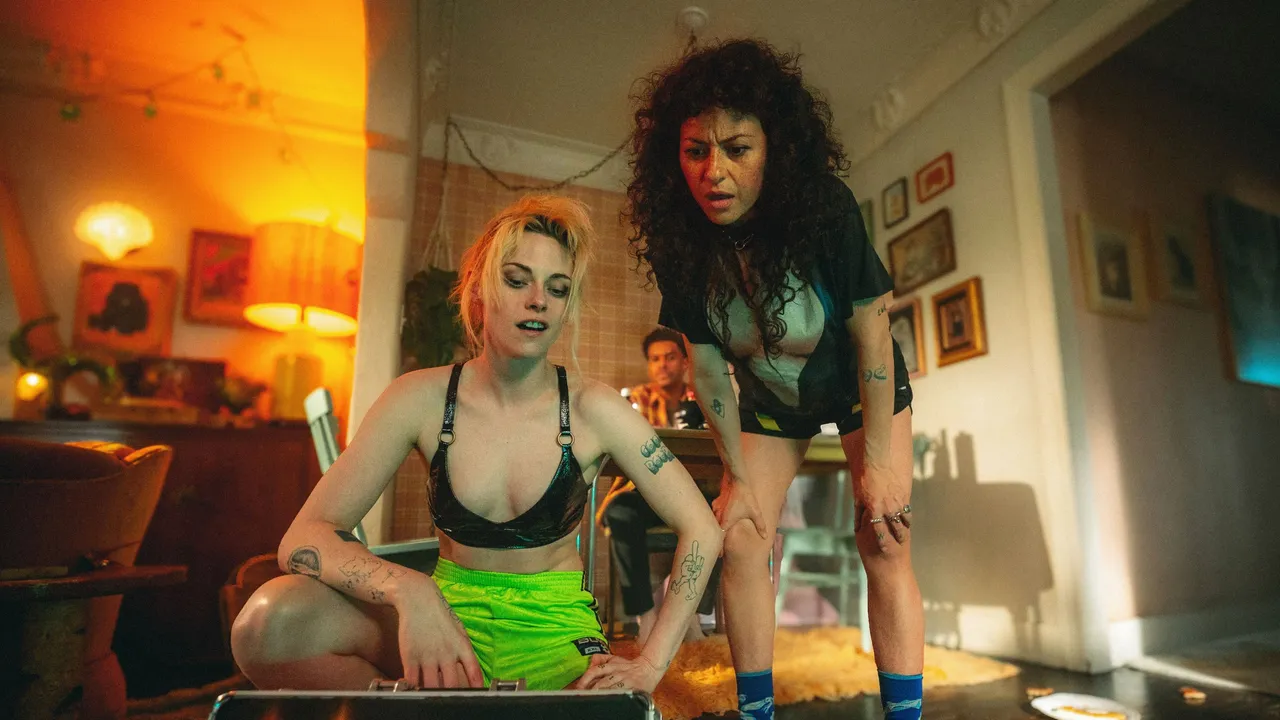
A few weeks earlier, Dylan Meyer was describing a similar instinct in her own directorial debut, The Wrong Girls—a profane, druggy stoner comedy about two aimless best friends who accidentally steal a suitcase stocked with vials of an experimental drug. There are talking cats, Dutch criminals, and telepathy. The protagonists, notably, are women.
Meyer wanted to avoid making “a girl movie doing an impression of boy movies.” The way around that was to start somewhere more intimate: “The nucleus is so personal and so actual that I think it couldn’t help but not be an impression of boy movies,” she says. “It never even considered being that. It only ever considered being the reflection of this relationship in my life.”
For their film, Ford’s touchstones include Wim Wenders’s Paris, Texas, as well as the friendship road movies of the late 1990s and early 2000s. They found themself thinking back to a period when it seemed like every quarter brought another hopeful movie about young women hitting the road, like 2002’s Crossroads starring Britney Spears. “I wanted to go back and harness some of that and do something for myself,” they say.

While American road movies tend to valorize individualism, it was never about conquering a destination for Ford, who grew up in St. Louis. “My whole life I was sat in a car for four to six hours at a time to see some distant relative because that’s how we stayed connected to each other…Cars meant connection, not this individualistic freedom,” they say. “And I think that’s true for a lot of people.”