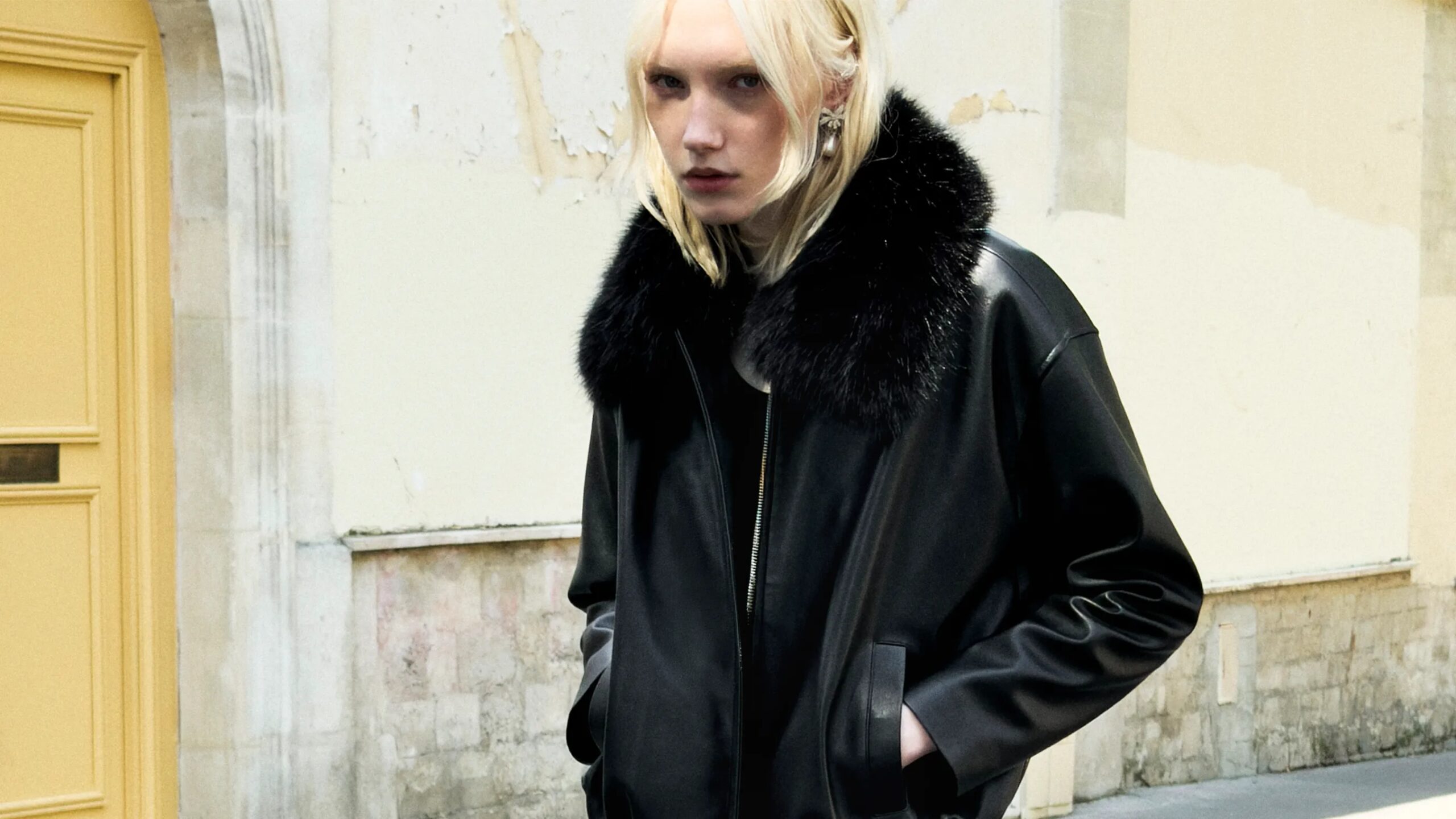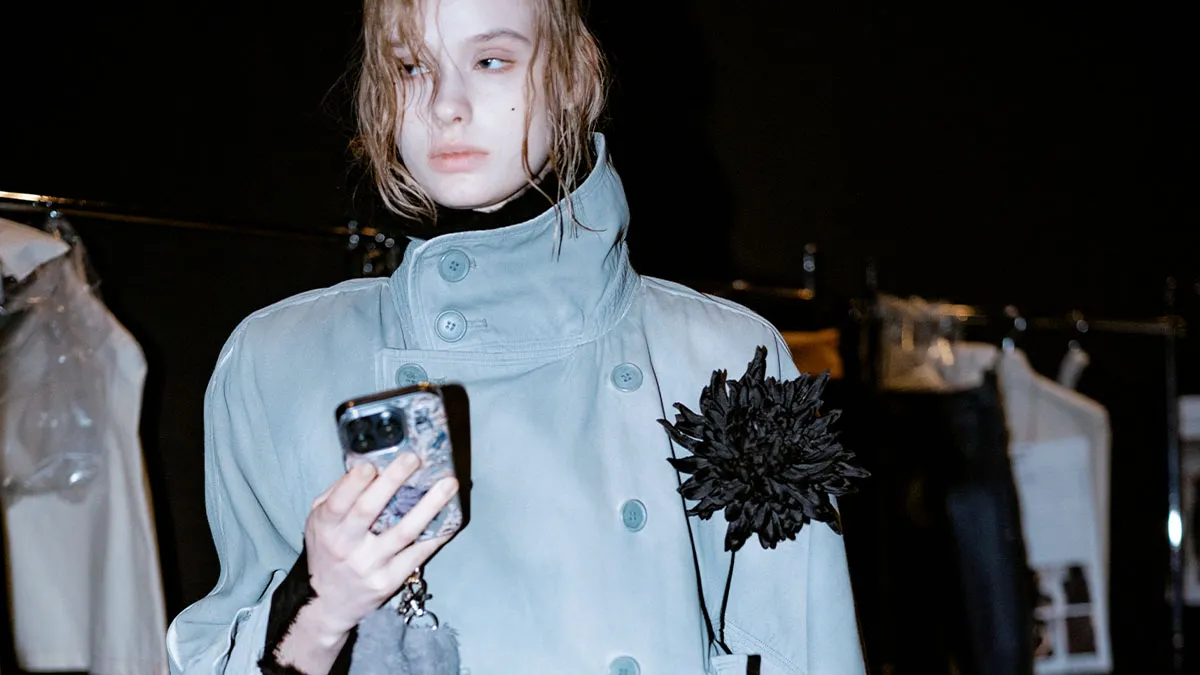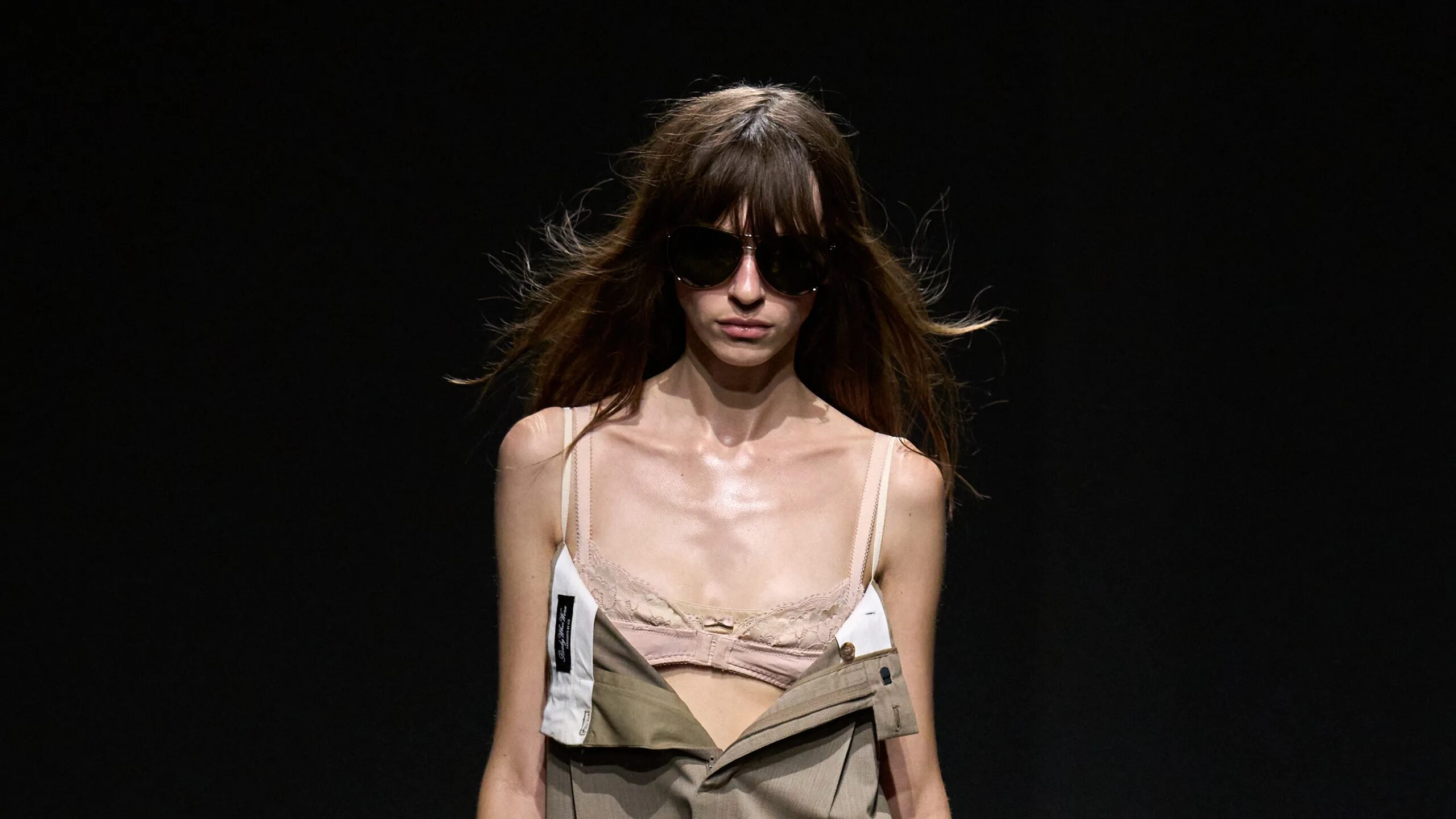
A shirt became a dress, trousers turned into a miniskirt, and a sweater moved freely between the two. At MM6 this season, familiar garments were not redesigned so much as persuaded to behave differently. Their proportions, closures and points of entry shifted, while their identities remained recognizableThat approach has long been part of the house’s vocabulary, but here it felt especially light on its feet. A shirt folded into a square could be worn as a dress without losing its shirtness; a sweater worn as a skirt gained a little crinoline-like volume from a “hip-paulette,” a studio-invented cousin of the épaulette. The clothes seemed to invite experimentation rather than demand it. “You try everything everywhere,” the spokesperson explained, recalling the childhood pleasure of putting things on without worrying about where they were meant to go.
The result was surprisingly pretty. MM6 has never been particularly interested in prettiness for its own sake, but a certain sweetness crept in almost accidentally. There were doll-like proportions, tiny Henleys, washed-out peacoats and little vintage-looking shorts, alongside dresses folded over themselves to reveal their construction. A childhood dressing-up game seemed to be taking place, only with slightly more conceptual weight.Menswear applied the same instinct more literally. Collars and button plackets migrated from the centre of shirts to the side; the stripe of a tuxedo trouser appeared on the inside. Martin Margiela’s familiar low-crotch trouser was slimmed into a decidedly skinnier proposition, while double belts and shifted proportions created further opportunities for things to be slightly out of place. The wardrobe itself remained reassuringly ordinary: tailoring, biker jackets, T-shirts, trousers. It was their coordinates that had been rearranged.
The fabulously versatile hip-paulette could give a sweater worn as a skirt a touch of volume, but the sweater could also simply be worn as a sweater. Nothing was permanently transformed. It was more a question of persuading each garment to reveal its split personality without guilt.Then came six Havaianas stacked on top of one another like a footwear mille-feuille, because at MM6 even the number six can become a design problem. The house’s slightly obsessive relationship with its own numeral was turned into a joke with actual toes: six flip-flops, six layers, a small monument to the pleasure of taking something utterly familiar and making it just strange enough.
MM6’s spokesperson talked about “reality,” but specifically a reality that isn’t boring, but incongruously joyful. Clothes should be able to change your day, give you an idea, make you want to put something on simply because it’s awfully jolly. This collection did exactly that, not by inventing a new wardrobe, but by giving the existing one a little more room to misbehave correctly.