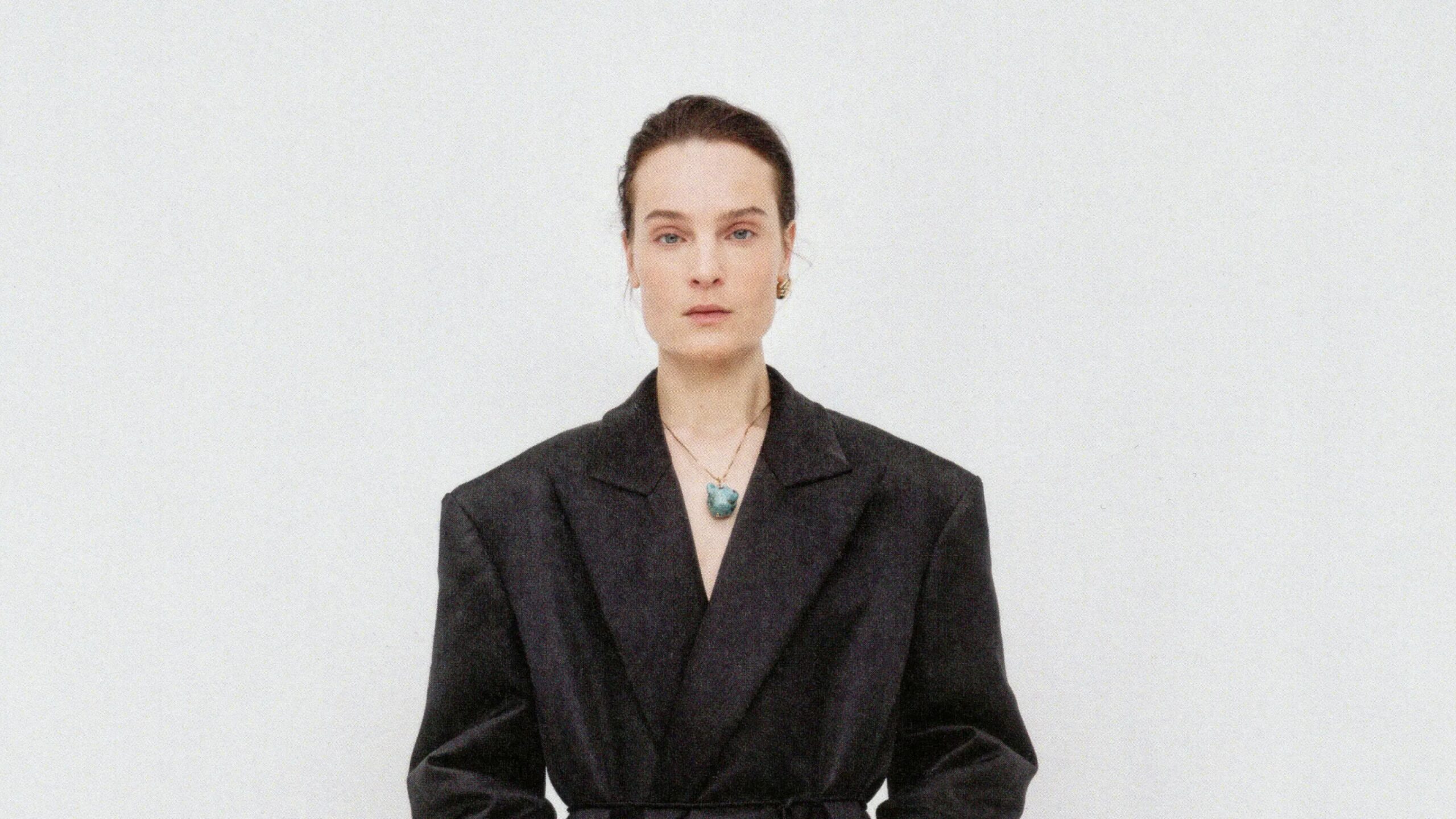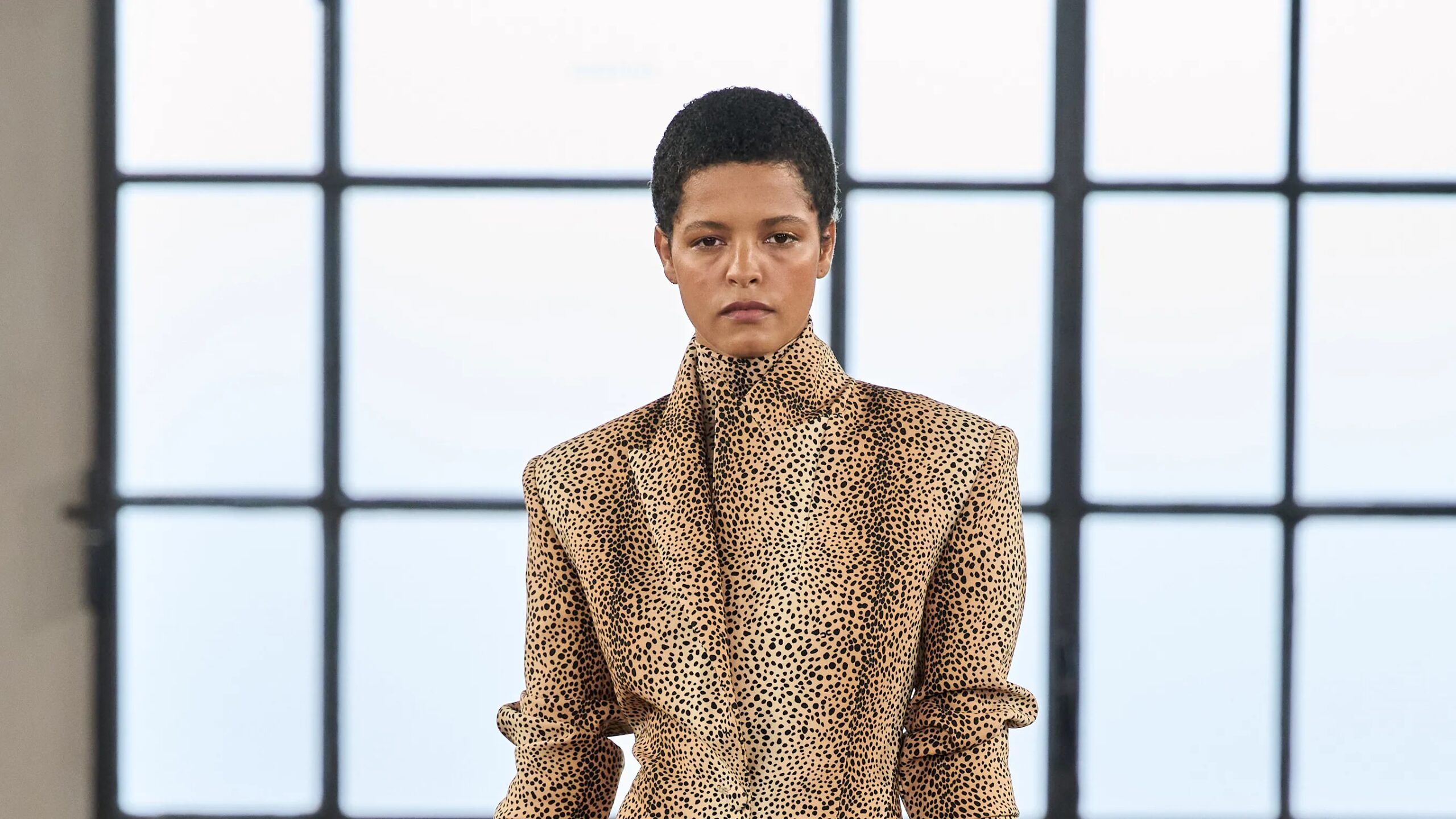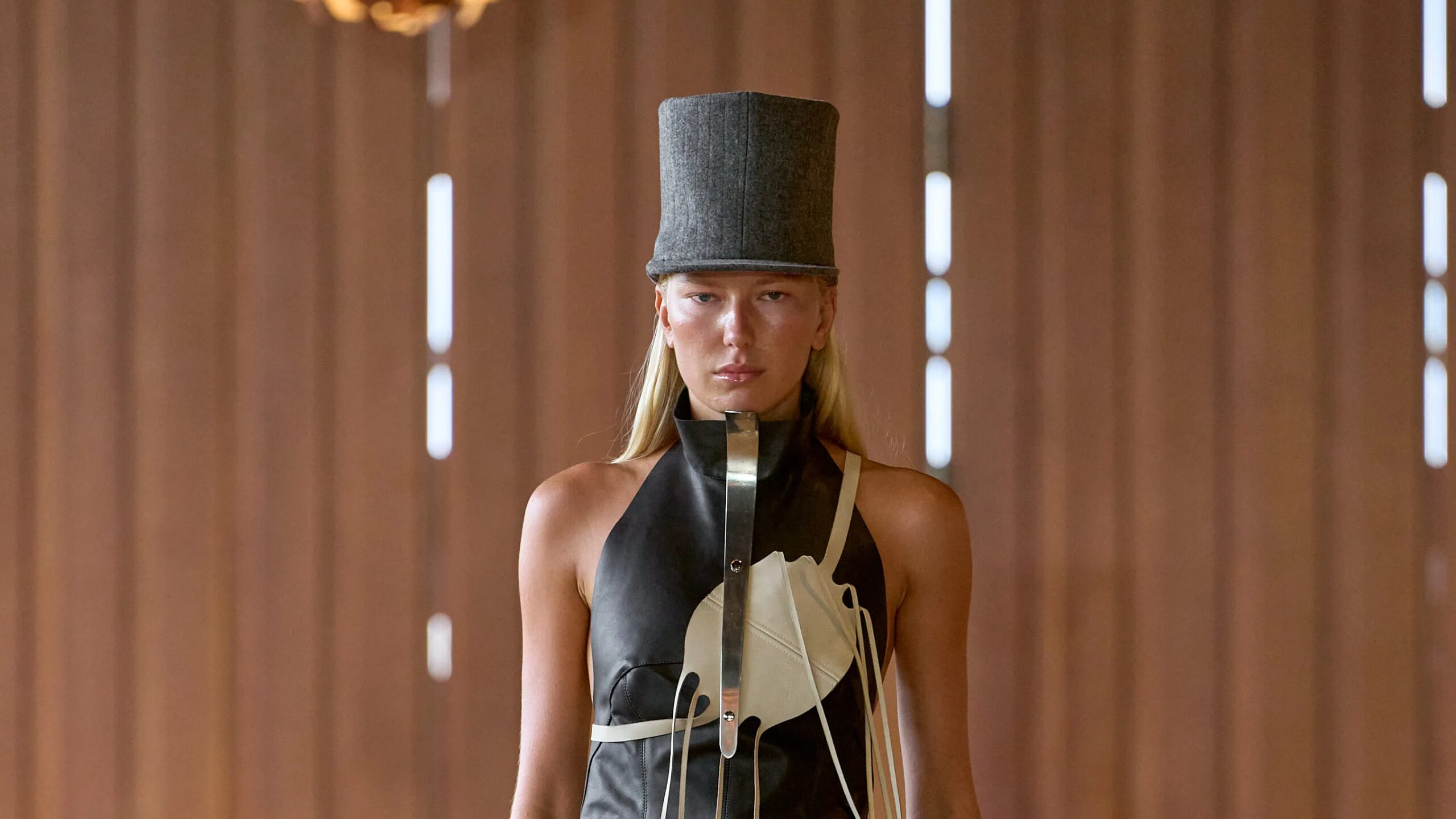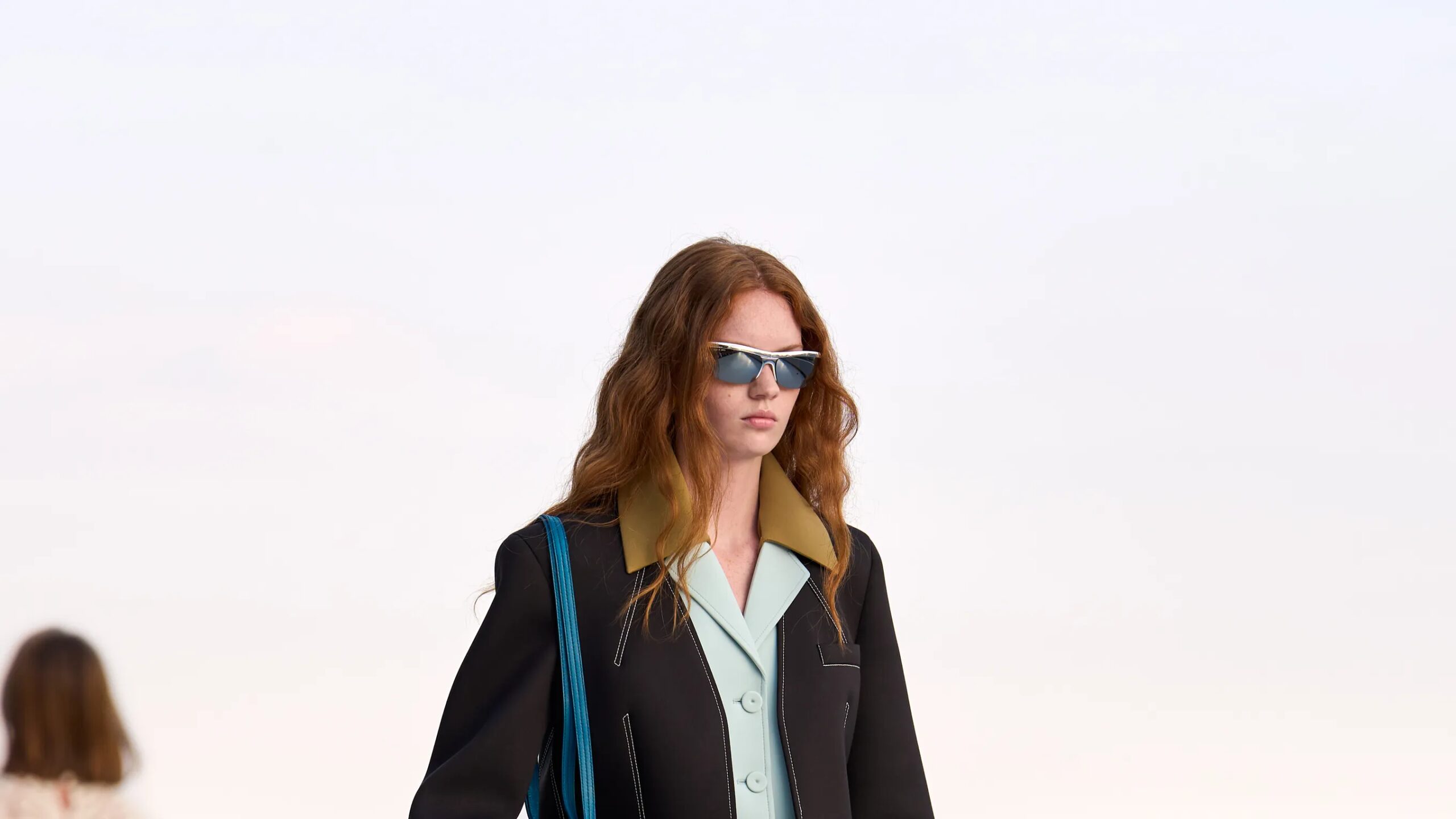
Simone Rizzo and Loris Messina made names for themselves at Sunnei with clever presentation concepts, not least of all with their last show in which they orchestrated a phony auction and took bids on the brand’s IP. Freshly installed at Moschino after Adrian Appiolaza’s exit, the duo picked up where they left off, staging a show on the roof of a parking garage on the edge of Milan and sending hundreds of extras streaming down the runway in the opposite direction of the models. Were they making a point about the clothes belonging on the streets? “Si,” Rizzo said, “but also belonging to real people.”
Here in the crucible of luxury fashion that is Milan, there’s a distinct trend away from runway dramatics this week. The new guard and the establishment alike seem tuned into the post-pandemic generation and the give-no-fucks freedom they bring to getting dressed. This is native territory for Rizzo and Messina. A few seasons before they called it quits at Sunnei, they summed it up thusly: “The moment we’re living in calls not for fashion magic but for fashion realism.”
It’s a rule-busting way to take over a legacy brand, where obeisance to design heritage is often demanded. But it’s one that Franco Moschino, Italian fashion’s impertinent prankster, might have appreciated. Moschino liked to poke fun at the fashion system, blithely co-opting other brands’ signatures—printing “Moscalvin Klino” on scarves and tweaking Chanel’s classic tweeds—and otherwise making a mockery of the luxury business. He also used his platform for social commentary about everything from inequality to the environment to the AIDS crisis.
Rizzo and Messina had some cultural commentary of their own: the BBL dress with its prodigious derriere and the man’s padded muscle tee being the most pointed. An Italian fashion insider suggested that the playful graffiti tees were a nod to Franco, who was “quite a gifted painter.” But otherwise the new designers seemed determined not to “replicate” or “imitate” the house founder. Instead, they leaned on their lively color sense and their grip on real-world clothes. As a rule, the more low-key the look, the better and more believable it was. These kids are alright.