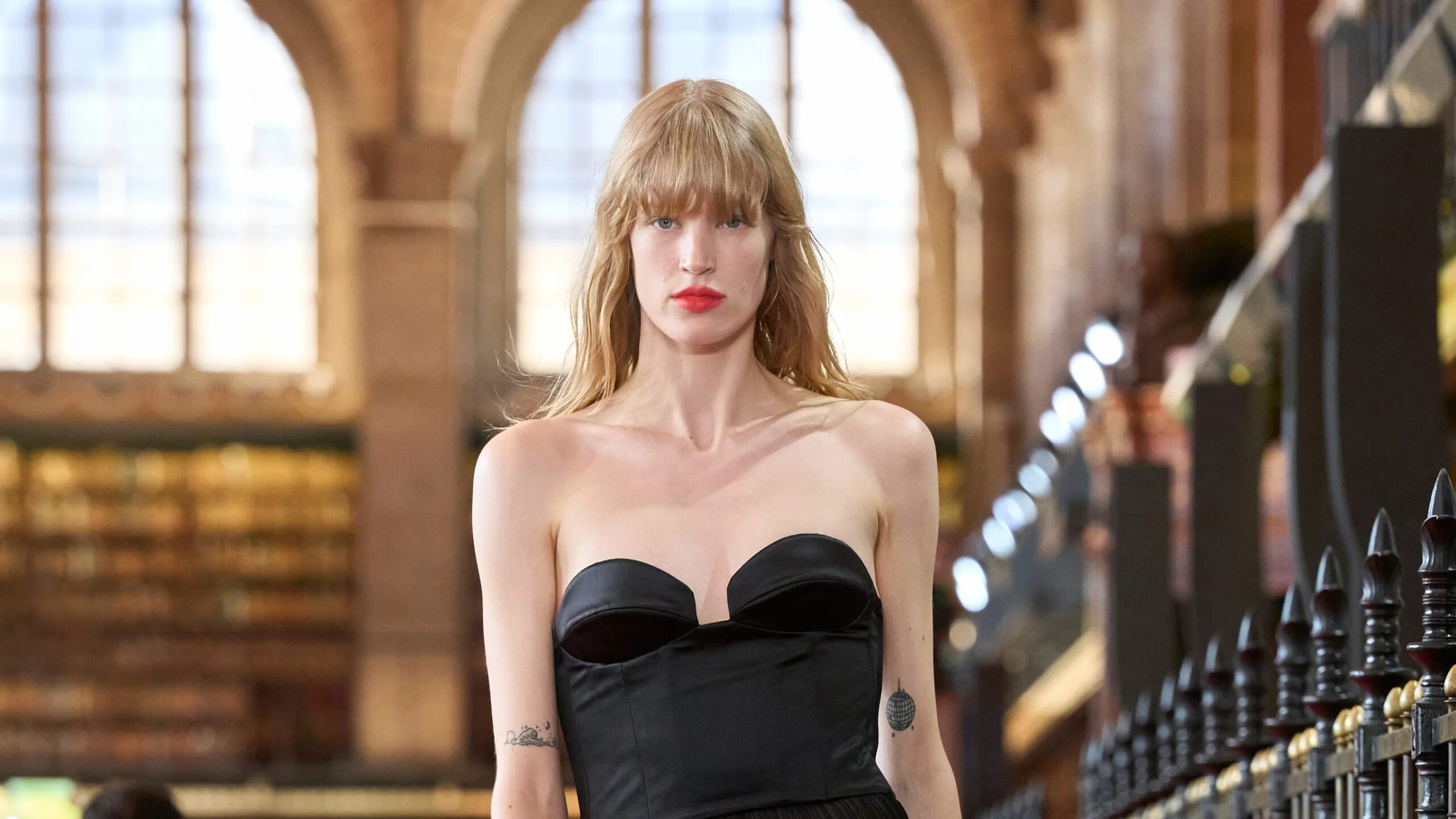
The astounding Bibliothèque Sainte-Geneviève played host to Alessandro Michele’s latest Valentino show. For the occasion, Michele produced a sort of bibliography of imagined books, complete with descriptions, made-up authors, and phony ISBNs. Among the many creative titles were A Garden of Small Errors, Elsewhere Is a Precise Place, and The Social Life of Velvet. In the copious show notes, he talked up the value of an “antilibrary” of unread books (a concept lifted from the Lebanese-American scholar Nassim Nicholas Taleb), comparing the enormous potential such a trove contains to a closet full of unworn clothes.
“Even the garments that we will never wear, no differently than those books sitting unopened on our shelves, still speak to us of the lives we could have lived. Not as regrets, but as promises,” Michele wrote.
This was his fourth ready-to-wear show for Valentino. His beginning here has been more tentative than the agenda-setting splash he made at Gucci a decade ago, but mega-success at one brand doesn’t guarantee it at another, as we’re all learning amidst the mass rejiggering of the last two years—a rejiggering that was precipitated by Michele’s exit from Gucci, as it happens.
In the current moment, the case can be made that first-time creative directors and less experienced Number Ones are having an easier go of it than their more established peers. It’s a burden of fame, you could say. Michele has been out and about this season—turning up at his former Gucci colleague Simone Bellotti’s Jil Sander show in Milan and at Haider Ackermann’s Tom Ford in Paris—but he doesn’t seem too outwardly focused or perturbed by the fashion noise. Instead, it looks like he’s been grappling with the Valentino heritage, finding ways to make the glamour, elegance, and perfectionism the late designer was so famous for sync up with his own more eclectic language. Getting to the essence has been a process of doing more with less.
The first task Michele seemed to set himself this season was finding a way to be comfortable with exposed skin. A long series of opening looks featured seamed-cup jewel tone satin bustiers as simple and unadorned as anything he’s ever done. These were worn with knee-length skirts of many varieties: crinkly crepon, floral silk dévoré, or leather, at least one of which came with feathers at the hem. It’s a charming, believable proposal for a certain type of society party girl, and likely to be influential, but add a men’s checked shirt to the mix and the plot starts to drift. A more convincing update paired an ’80s-ish jewel buttoned jacket with lace biker shorts.
For guys, Michele let his eclecticism loose, misbuttoning double-breasted jackets so they scrunched at the waist, pulling up silk boxers inches past pant waistbands, and tossing into the mix baseball caps printed with the words Villain Teen (sounds like Valentino, my seatmate helpfully pointed out). The Valentino man is much more casual than his female counterpart.
Where Michele has a real sense of the story he’s telling is with the women’s eveningwear, which toggled between his own more ornate signatures—rhinestones and ruffles, among them—and the restrained sense of drama Valentino Garavani preferred, as seen in a pair of minimal satin columns that reserved any grand flourishes for their trains. “I’m trying to translate beautiful things with my idea of freedom to make the look,” said Michele. He nailed the formula with a black velvet dress that plunged down to the navel below a messy stack of gold and pearl necklaces.