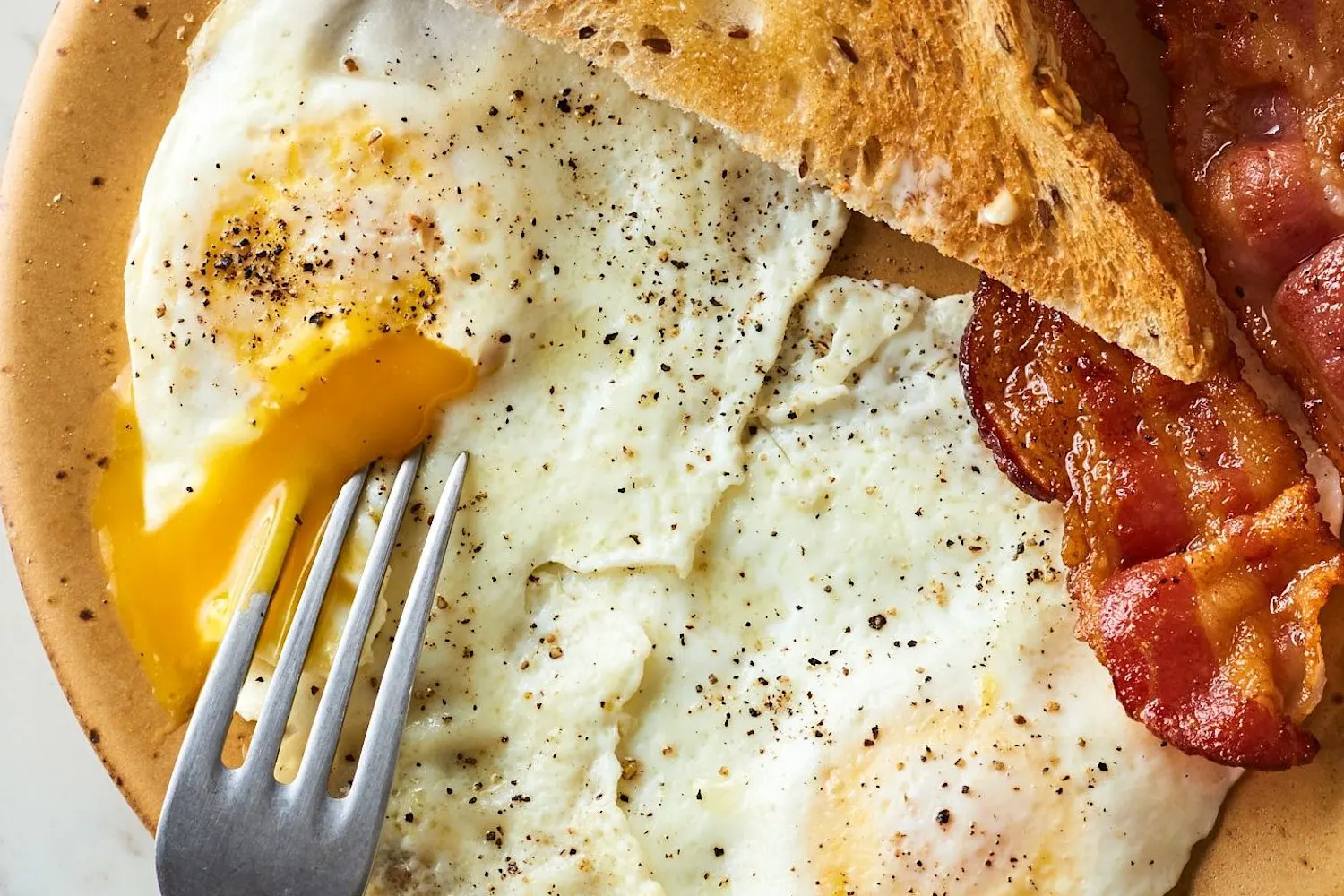
Over-easy eggs are a classic brunch staple. In fact, it was the only way Lindsay, our editor-in-chief, ordered eggs for a few years. What makes them so good? Over-easy eggs are characterized by a lightly fried egg-white exterior, while still maintaining a runny yolk in the center. It’s a culinary feat.
Despite the name, it’s actually not always that “easy” to make this dish at home. So to get the best tips to master this technique, I turned to the professionals to learn exactly what you need to do to cook the perfect over-easy egg. I spoke to Kyle St. John, executive chef at The Ranch at Laguna Beach; Michael Grande, executive chef at Pendry Baltimore; Dennis Vanterpool, executive chef at The Ritz-Carlton, Reynolds Lake Oconee; Efe Salar, executive chef at The Ritz-Carlton Resorts of Naples; Robert Martinez, chef de cuisine at Marelle at Sandbourne Santa Monica; Mike Alaridi, executive chef at Pendry Chicago; and Guido Ojeda, executive chef at Kimpton Grand Roatán Resort & Spa. Here’s what they had to say.
1. Always use a nonstick pan.
All the chefs agreed that using a nonstick pan is crucial to making a perfect over-easy egg. Why? “It minimizes sticking and makes flipping much easier,” says Salar. Grande always chooses a 7-inch nonstick pan, and Ojeda even has a nonstick pan reserved exclusively for eggs. St. John recommends the Made In carbon steel pan, but any nonstick pan will do. “If you prefer stainless steel, make sure it’s properly preheated and lightly coated with oil,” says Salar.
2. Use low to medium heat.
Another key thing all the chefs agreed upon was cooking the egg slowly at a low to medium heat. If you start with too high of a heat, you run the risk of burning your eggs. Grande says, “Keep your heat consistent and do not fuss with it.” Ojeda agrees: “Temperature control is essential. The best way to improve is through practice — measuring cooking times and paying close attention to heat levels. Once you have control over timing and temperature, the rest becomes simple.”
Another pro tip a few of the chefs mentioned that people tend to overlook is using fresh eggs. Vanterpool, Salar, and Martinez all swear by this. “They hold their shape better and give you a cleaner result,” Salar says. Martinez adds, “When they’re very fresh, the whites are tighter and hold more structure.” He also recommends cracking them into a ramekin first and seasoning them at the very end.
4. Cook it in butter (or olive oil).
Most of the chefs recommended cooking over-easy eggs with a knob of butter, while a few recommended olive oil, but all agreed — don’t be skimpy with it. This will help with the ease of the flip (more on that below). “The butter in the pan should start to foam and bubble. Once the butter hits this stage, take your eggs and slide them into the pan,” Grande says. After this stage, the chefs agreed that you want to let the egg cook for a few minutes undisturbed until the whites are just set. After leaving them for a few seconds, St. John says, “you can lightly swirl the pan to make sure [the] eggs didn’t stick.”
The biggest thing to nail when it comes to cooking over-easy eggs is the flip. “It’s a great skill to master and [helps the egg] cook faster,” St. John says. Once the egg whites are set, “make sure the eggs are towards the back of the pan, opposite the handle, commit, give it a quick flip, and voila! You just made over-easy eggs like a chef.”
Grande also recommends using a quick “flick of the wrist” and even suggests “practic[ing] with a piece of bread in a pan to get a consistent flipping motion down.” After the flip, the chefs recommend turning off the heat and letting the eggs sit in the pan for a few more seconds (some recommended 10 to 20, some 25 to 30, and others 30 to 45). You can play it by ear, but ultimately “you’re not trying to cook the yolk through; only to lightly set the surface,” Salar says. “And don’t rush the flip; wait until the whites are fully set underneath.”
But only flip once. “A common mistake is flipping the egg multiple times or leaving it yolk-side down too long. Flip just once and give the yolk side only 5 to 15 seconds in the pan to keep it perfectly runny,” says Alaridi.
6. A rubber spatula is your friend.
If you do opt for the flip method, another essential tool is a rubber spatula. Vanterpool says, “I prefer to use a thin rubber spatula to help when lifting the edges and flipping.” Salar also recommends “using a thin, flexible spatula so you can flip the egg cleanly without breaking the yolk.”
To yield perfect over-easy eggs, you need to be patient. “Consistency comes from controlling heat and being patient,” Salar says. Starting off with too high of a heat, not preheating the pan properly, and not using enough fat are all things that will affect your eggs. “Too hot and the whites become rubbery before the yolk is ready. [Cooking] over too high heat leads to crispy, browned edges and undercooked whites,” Salar says.
As mentioned above, you don’t want to rush the flip either. “Flipping too early [can] cause the egg to tear or the yolk to break,” notes Salar. You also don’t want to overcook the egg after the flip, either. Keep the heat low, watch the whites closely, and allow it to just finish cooking for restaurant-quality results every time.