Is London Fashion Week a land of opportunity?
Brands, new and established, seem to think so. They’re piling onto the spring 2027 calendar and staging events following the British Fashion Council‘s decision to waive the fees for shows, part of an overarching plan to spur growth, not just in London but across the U.K. and internationally.
Other brands are making a London comeback, showing for the first time or revealing a new face to the world during the five-day showcase, which wraps up on Sept. 21 with the Burberry show.
Alexander McQueen has leapt across the Channel, and is showing on the calendar for the first time in years. Also, after 16 years, the brand is collaborating once again with the jeweler Shaun Leane, and his new bespoke brand 12.
Mulberry is reintroducing ready-to-wear with Christopher Kane, and Lulu Guinness is also making a comeback, taking more creative control of her business and transforming her signature lip motif into a lineup of clutches with a Surrealist twist. Although her studio is smaller than in the past, she wants to work, and is on the hunt for creative projects and opportunities to weave together art and craft.
Marks & Spencer is marking 100 years in fashion — and its push into the U.S. market — with an in-season runway show that will feature Erin O’Connor. According to the store, the plan is to continue showing during London Fashion Week.

Gillian Anderson in a campaign for Marks & Spencer, which will stage a see now, buy now show at London Fashion Week in September.
Courtesy
As it expands internationally, M&S is also keen to tout its value-for-money fashion proposition, and show the breadth of its offer. It’s been working on campaigns with Gillian Anderson, and has begun selling at select Nordstrom stores. It has also brought e-commerce giant Zalando on board as its European partner.
International brands have joined the schedule, too, including the Indian contemporary label Lovebirds, and H&M, which has collaborated with Nick Knight on an interactive show that allowed audience members to become runway models. The Irish brand Paul Costelloe, a pillar of the London calendar, is using the runway to make a fresh start following the death last year of the namesake designer.
His family hasn’t missed a beat. His artist son and Istitituto Marangoni graduate William Costelloe — one of seven children — has taken over as creative director, and switching the focus to luxe, tailored classics in luscious Irish linen, wool and silk.
“We want to be more present in the U.K., and make a push in the U.S., too. We want to see women wearing Paul Costelloe and to start selling in places like Harrods, and John Lewis. We’re competitive and ambitious,” he said.
Simone Rocha, whose father John Rocha was a contemporary of Costelloe’s, is keeping her women’s show in London for a variety of reasons.

Simone Rocha Fall 2026 Ready-to-Wear Collection at London Fashion Week
Giovanni Giannoni/WWD
“London is home, and still feels very important to me. I feel very comfortable here, in my own skin. It gives me the opportunity to really self-express,” said Rocha who always chooses evocative, historic venues for her shows.
For spring 2027, she’ll be returning to the Old Bailey, the famous criminal court where Moll Flanders is tried for theft in the classic novel by Daniel Defoe, and where Charles Darnay is put on trial for treason in “A Tale of Two Cities.”
Harris Reed, who showed his spring collection at the Mandarin Oriental ballroom on Thursday night, is doubling down on the British capital with plans to open a salon in Hatton Garden, the diamond district in East London, later this year.
“London is a city that has supported and loved me from the beginning,” said Reed, who is half-American and half-British, and has been showing his signature collection in London here since 2020, soon after he graduated from Central Saint Martins.
“People love coming to London because they think of Galliano, McQueen and Westwood. It’s a place where people want to buy theatrical pieces. And I think being a bit more theatrical has saved me in a world that is going through very hard times. We’re building a space where we can actually greet those clients and that’s really exciting. I also love the fact that we’ll be surrounded by diamonds — and amazing craftspeople,” he added.
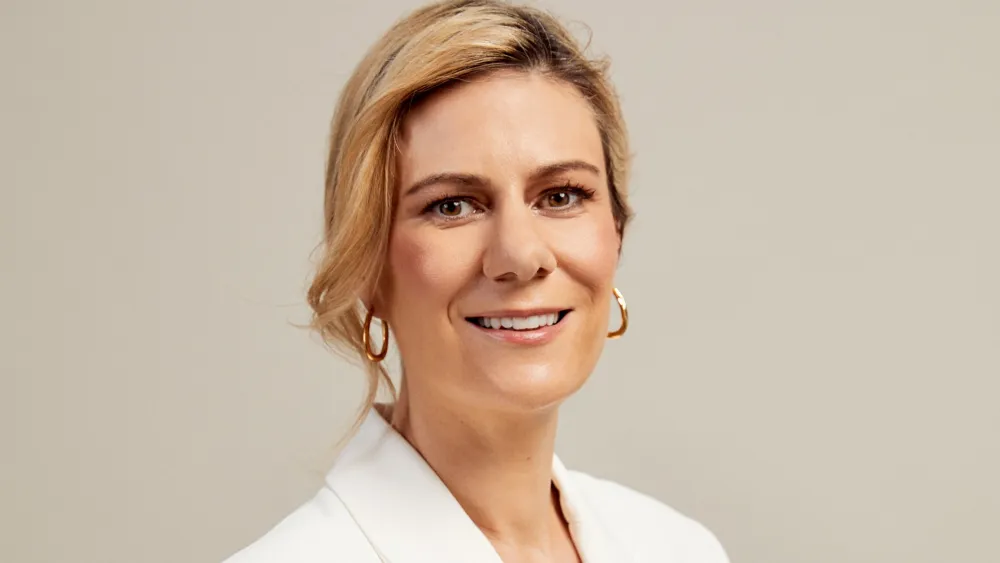
The British Fashion Council, guided by new chief executive officer Laura Weir, sees London Fashion Week as an enormous opportunity, a lever to promote the industry at home and abroad, and a way to help secure much-needed funding for designers and businesses.
Fashion investors here are rare, the wholesale market is narrowing and, as has happened in the U.K. for decades, many designers are struggling to sustain their businesses.
In addition to waiving the seasonal calendar fees, the BFC has doubled its investment in its international guest program, which pays for press and buyers to attend the shows.
This year, retailers such as 10 Corso Como, Dover Street Ginza and Paris, Le Bon Marché, Nordstrom, The Webster, Neiman Marcus, Saks, Voo Store, Isetan, Galeries Lafayette will be taking part in the enriched program along with publications from the U.S., Germany and France.

The Lulu Guinness gold lips clutch, which will debut this season at London Fashion Week.
The BFC has also sourced enhanced funding for its Newgen program of emerging talent and for scholarships. It’s getting some of that funding from the British government (never an easy task) and is forging closer relationships with government ministers, too.
In a release to kick off London Fashion Week, Ian Murray, minister for creative industries, media and arts, touted the cultural power of London Fashion Week.
“Britain’s fashion industry continues to set the standard internationally. It is one of our great creative success stories, forming an important part of our cultural identity while supporting businesses and communities right across the U.K. Behind every collection on the runway is a network of designers, manufacturers, textile businesses, craftspeople and creative professionals whose talent helps make British fashion a powerhouse,” he said.

Pavita Cooper has been named chair of the BFC.
SANE SEVEN/Courtesy
With those ambitions in mind, the organization has also picked a new chair, Pavita Cooper, a seasoned boardroom operator and adviser whose career spans business, government and culture.
She has held senior executive roles at Lloyds Banking Group and Christie’s, sits on the boards of The King’s Trust and The Old Vic and chairs the 30 Percent Club, a campaign to increase the number of women in senior corporate leadership.
Cooper’s appointment aligns with the BFC’s objectives stated in Weir’s four-year strategy and financial plan. Called “BFC 2030: Access, Creativity, Growth” the aim is to strengthen fashion’s influence with government and policymakers, expand its fundraising capabilities and position the industry more clearly as a contributor to economic growth and cultural soft power.