When Prada’s popular “Waist Down” exhibition debuted in 2005 in Shanghai, later installed in its SoHo flagship in New York, its curator Kayoko Ota confessed that she gained a new appreciation for the circular garment.
“Usually when you focus on fashion design, you tend to look at the whole body or the torso,” she told WWD at the time. “We realized that very little attention was paid to what’s happening at the waist or from the waist down. It’s actually where a lot of movement takes place.”
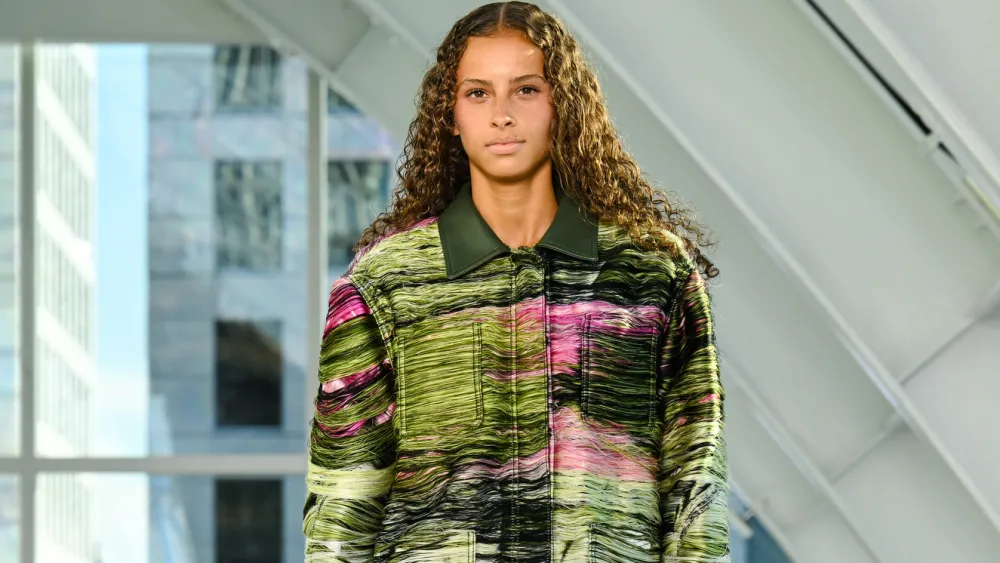
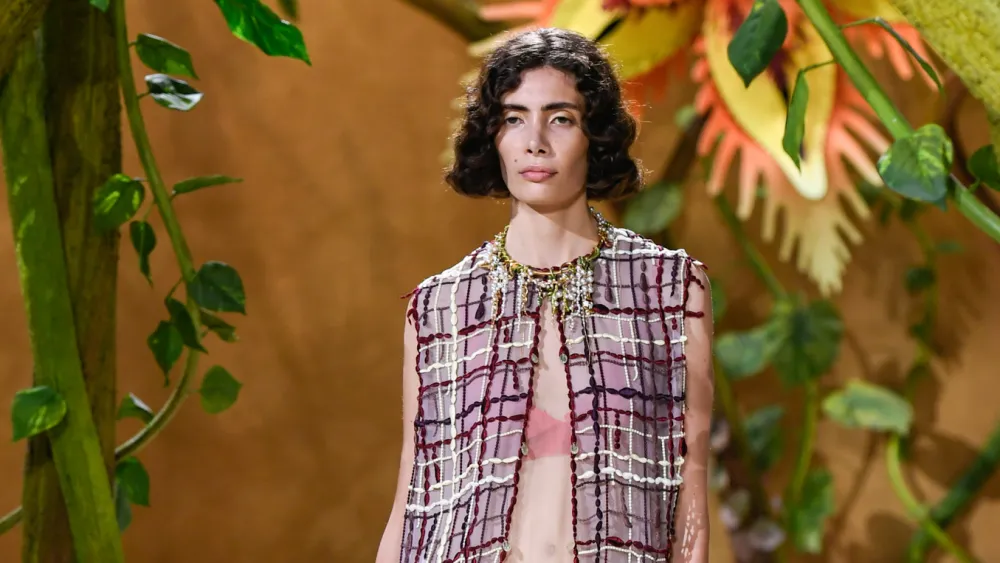
For their spring 2027 women’s collection, Miuccia Prada and Raf Simons focused all their attention on the skirt, arguably the garment infused with the most “Prada-ness.” It yielded one of their best and easiest-to-like shows in years.
Prada, forever in a skirt, lauds the garment as flexible, adaptable, full of meaning and capable of contradictions.
During a seated preview with about a dozen editors before the show, during which she repeatedly rearranged her blush-colored silk number with a scalloped hem, Prada likened the skirt’s rectangular shape to the frame of a painting.
“So you are obliged to put ideas on the frame,” she said matter-of-factly.
Simons related that he dug up an old Charlie Rose interview in which Prada told him that a skirt for a woman is the equivalent of a T-shirt for a man.
In his mind, too, a skirt can be the answer to innumerable occasions, “like when you want to be sexy, you want to be luxurious, you’re going to work, or you want to be at ease with your kids.”
The show certainly proved that skirts cast myriad moods, and it thrust Prada back to its sweet spot of feminine, functional and intellectual, those qualities parsed in all the right doses.
Making a comeback were many of the elements that have propelled the brand over the years: “ugly” prints with psychedelic overtones; technical materials like black nylon; ladylike handbags and heels; and dollops of crystal embellishment, here often embedded on the thick Velcro closures for wrap skirts, which Prada characterized as one of “the most primitive, instrumental pieces of clothing in history for men and women.”
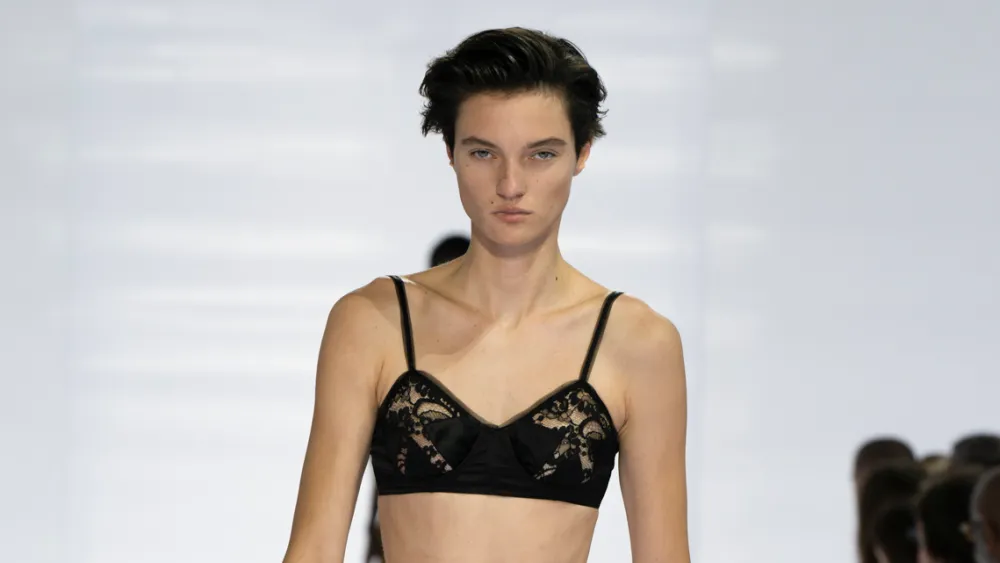
In lieu of tailoring, there were bra tops, cotton shirts and humble sweaters, one of Miuccia Prada’s go-to garments. (She explained backstage that she doesn’t like many fashion fireworks near her face, save for her spectacular vintage jewelry.)
You felt the sure hand of Simons, too, who has made beefy leather car coats and perfecto jackets new staples in the Prada wardrobe, and brought some underground rave energy, and industrial tinges, too.
This could be felt in the spray-painted leather car coats and pleated skirts — the closest the show came to proposing true outfits — and the sculptural satin bra tops, some attached to arm cuffs dangling little pouches.
Both Prada and Simons insisted that their all-skirt show offered freedom, with Simons explaining that outfits designed from head-to-toe “don’t give a lot of possibilities.”
He paused, and then added with a chuckle, “Well, we might do that next season!”