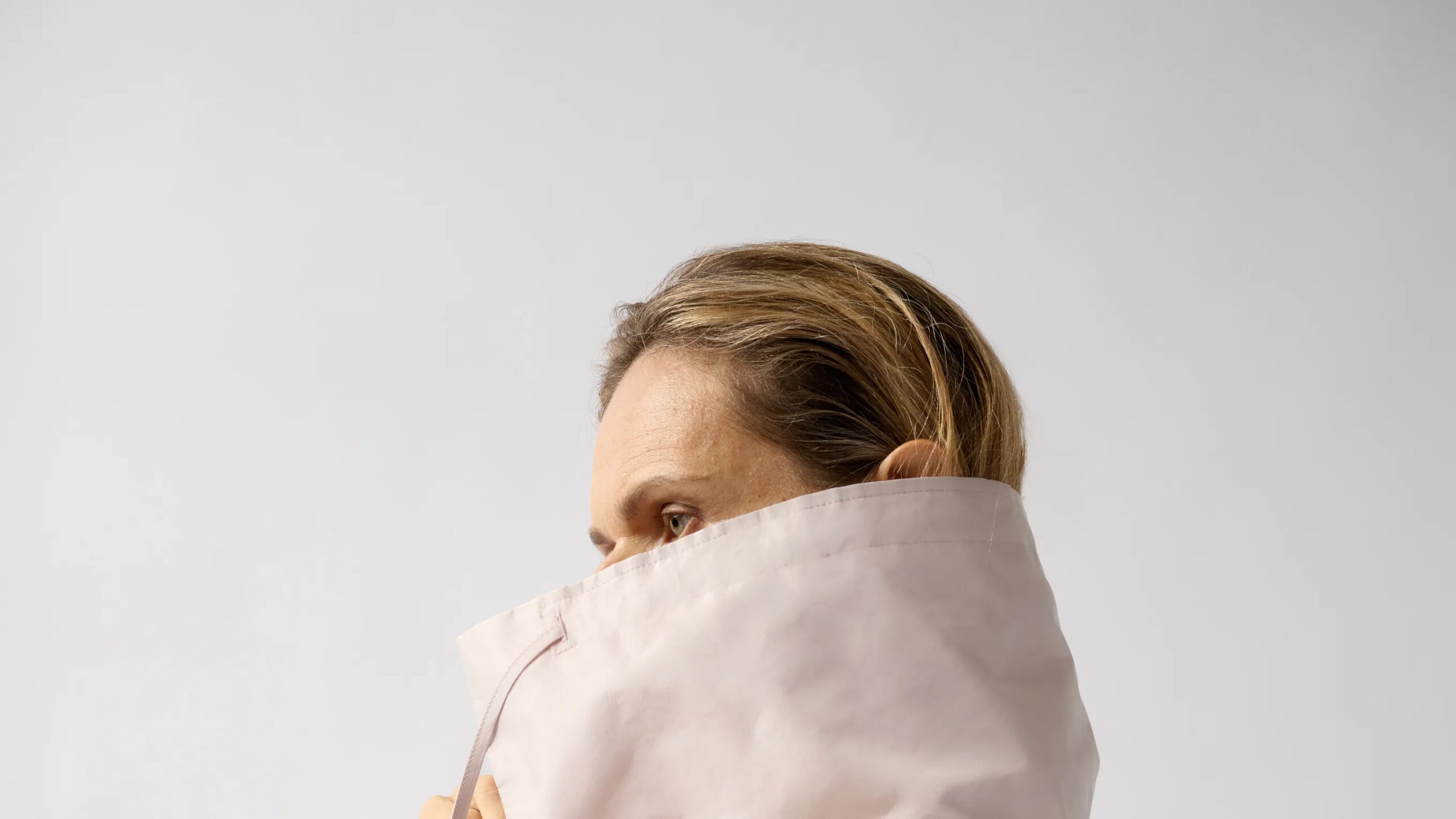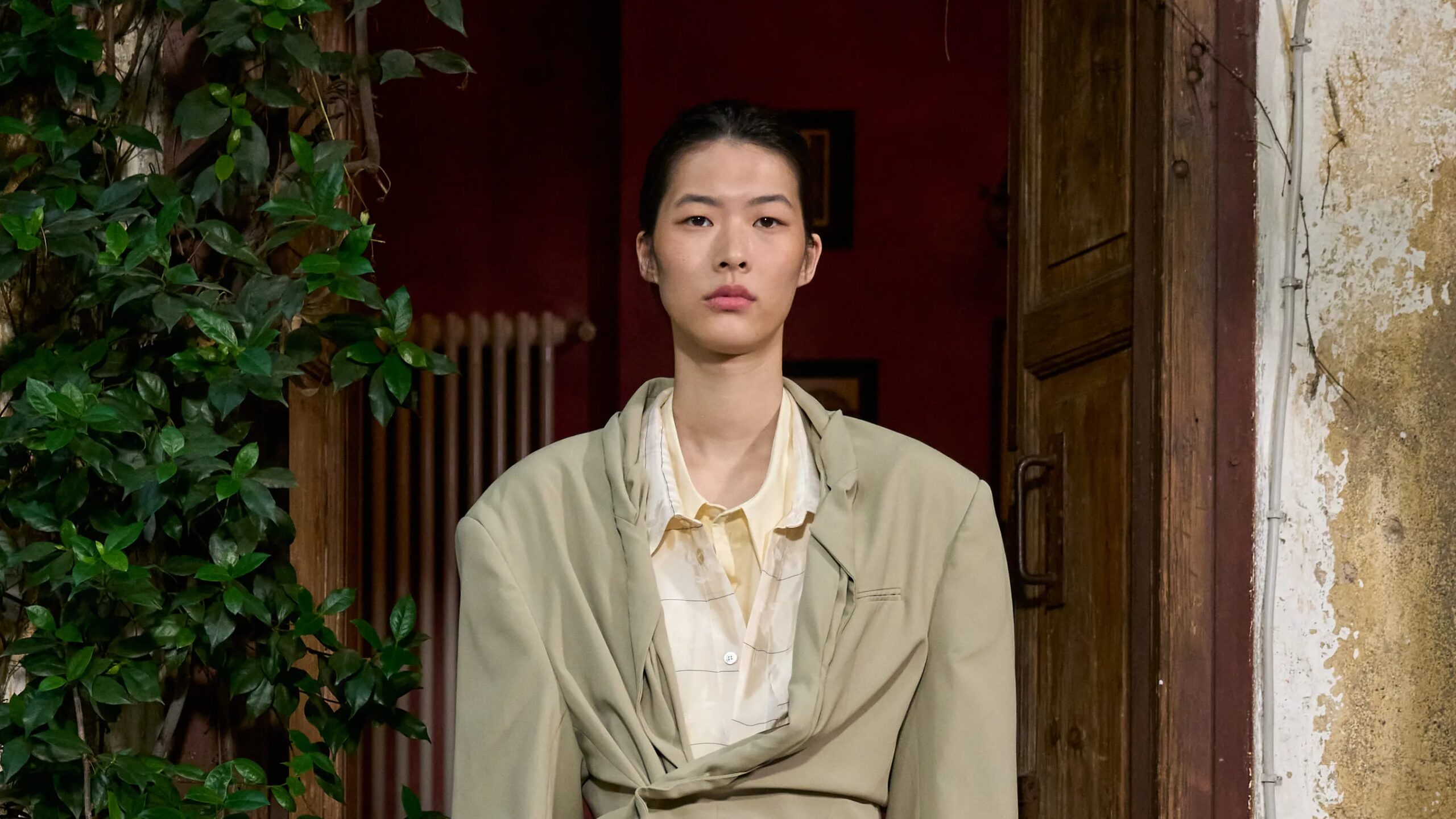
In a romantic garden concealed within a Milanese courtyard, Luca Lin made a convincing argument for the pleasure of everyday clothes. The setting was serene: plants and filtered light in conversation with the garments, as if they had been invited outdoors to reconsider their relationship with the body.
Lin began with the prosaic cast of the everyday wardrobe and proceeded to give each a slight nudge. His patternmaking background remained the engine of the process. Shirts, trousers, and jackets were deconstructed and reconstructed, folded and unfolded, until something distinctive emerged with a subtly different logic.
“At a moment when there is so much product out there,” Lin said, “I wanted to create something that could stand apart.” His answer to the problem of a signature was refreshingly less gimmicky than most. Rather than inventing one instantly identifiable trick, he planted small signatures throughout the wardrobe. Buttons on the shirts, for instance, came in irregular colors from surplus stock rescued from larger productions, so that although the fastening remained perfectly symmetrical, no two shirts were quite alike. The lapels of blazers were tightly rolled to look like twisted ribbons.
Adaptability was built into the construction. Multiple folds on the waists of trousers and balloon skirts allowed the garments to adjust to the body, while a jacket might have two detachable sleeves, turning from vest to capelike outer layer according to mood or circumstance. Deconstruction here was not an intellectual exercise performed on the clothes; it was an imaginative and practical way of giving them more than one life.
Color provided another layer of distinction. Lin worked through multiple shades of the same hues and across different materials, allowing colors to accumulate through the layers rather than sit on the clothes as a single declarative block. The effect had a delicate intensity, and helped give the collection its particular light.
Around 80% of the collection was made from deadstock fabrics, an approach that fits neatly with Lin’s interest in making less rather than adding indiscriminately to an already crowded wardrobe. There was little sermonizing about sustainability, though. The better argument was simply in the clothes: existing materials made to feel new, familiar garments made slightly strange, and individuality achieved through details small enough to be noticed rather than announced.
Lin, who was born in Reggio Emilia to Chinese parents, has been steadily refining this language, and his selection as a semifinalist for this year’s LVMH Prize felt like a meaningful marker of that evolution. What is encouraging is not a sudden reinvention but the opposite—a growing confidence in his own grammar. The collection felt sophisticated in construction yet fluid and poetic in spirit, distinctive without insisting on its own cleverness. Lin seems interested in the harder proposition: achieving clarity of purpose through the coherence of his thinking, until authorship becomes something you register rather than something that needs to be declared.